AQUA MD
Explore the Supportive Benefits of High-Dose Vitamin C
An Adjunctive Option for Cancer Wellness during Chemotherapy - Backed by Compassionate Care
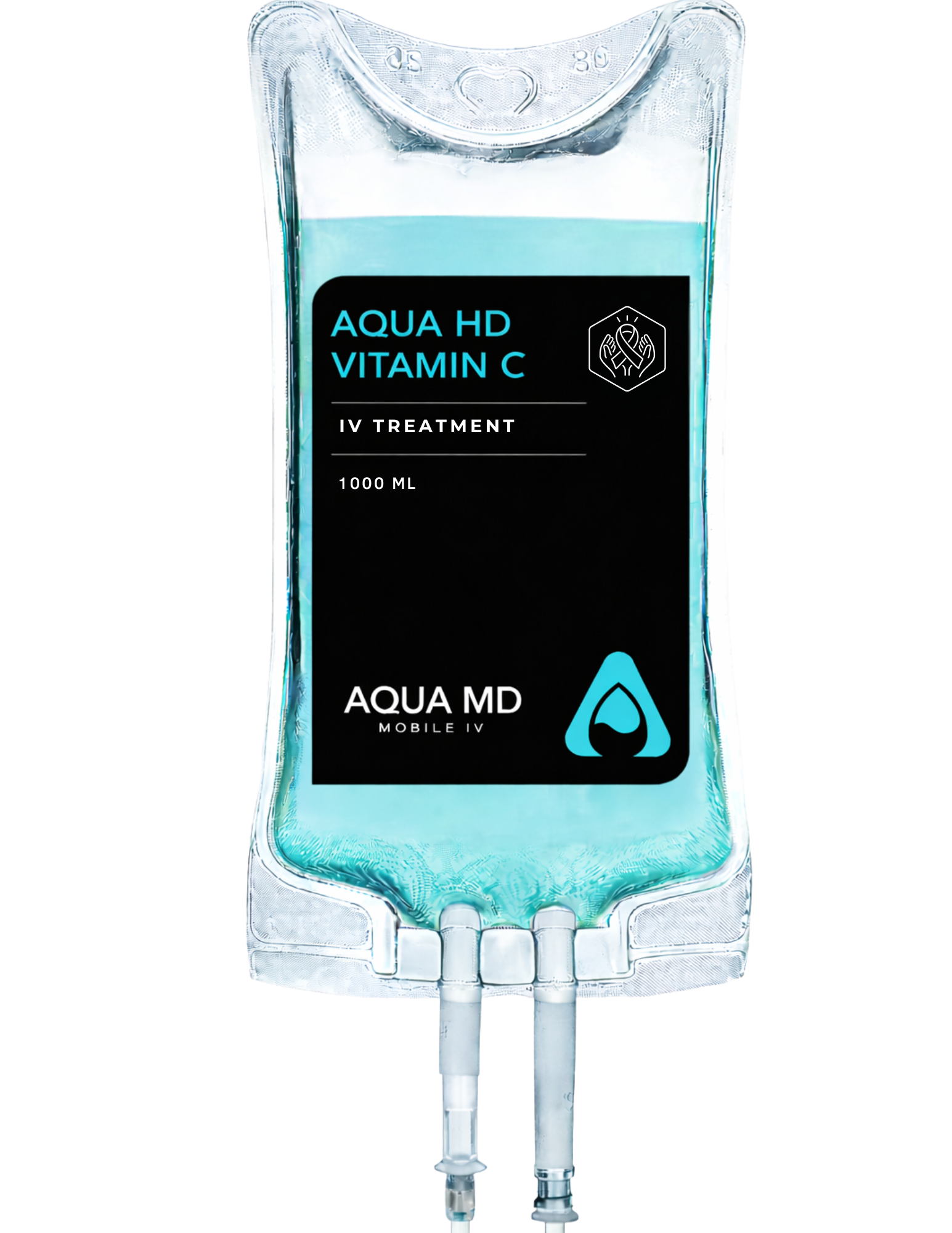
What’s Inside AQUA HIGH-DOSE VITAMIN C
Core Ingredients and Benefits:
Vitamin C (Ascorbic Acid – Preservative Free):
May act as a pro-oxidant in tumor environments at high doses, potentially creating oxidative stress that selectively affects cancer cells.
Supports normal immune system function and may help promote overall comfort during periods of fatigue, inflammation, or nausea.
Supports normal tissue maintenance and recovery processes.
Some individuals report changes in comfort and overall quality of life during chemotherapy.
*This service is offered as supportive wellness care and is not intended to diagnose, treat, cure, or prevent disease. Clinical relevance may vary and remains an area of ongoing investigation. Individual outcomes are not guaranteed.
When To Drip

Science-Guided Adjunctive Care

Immunity & Wellness Energy Support
Aids Tissue Renewal

Post-Chemotherapy Recovery
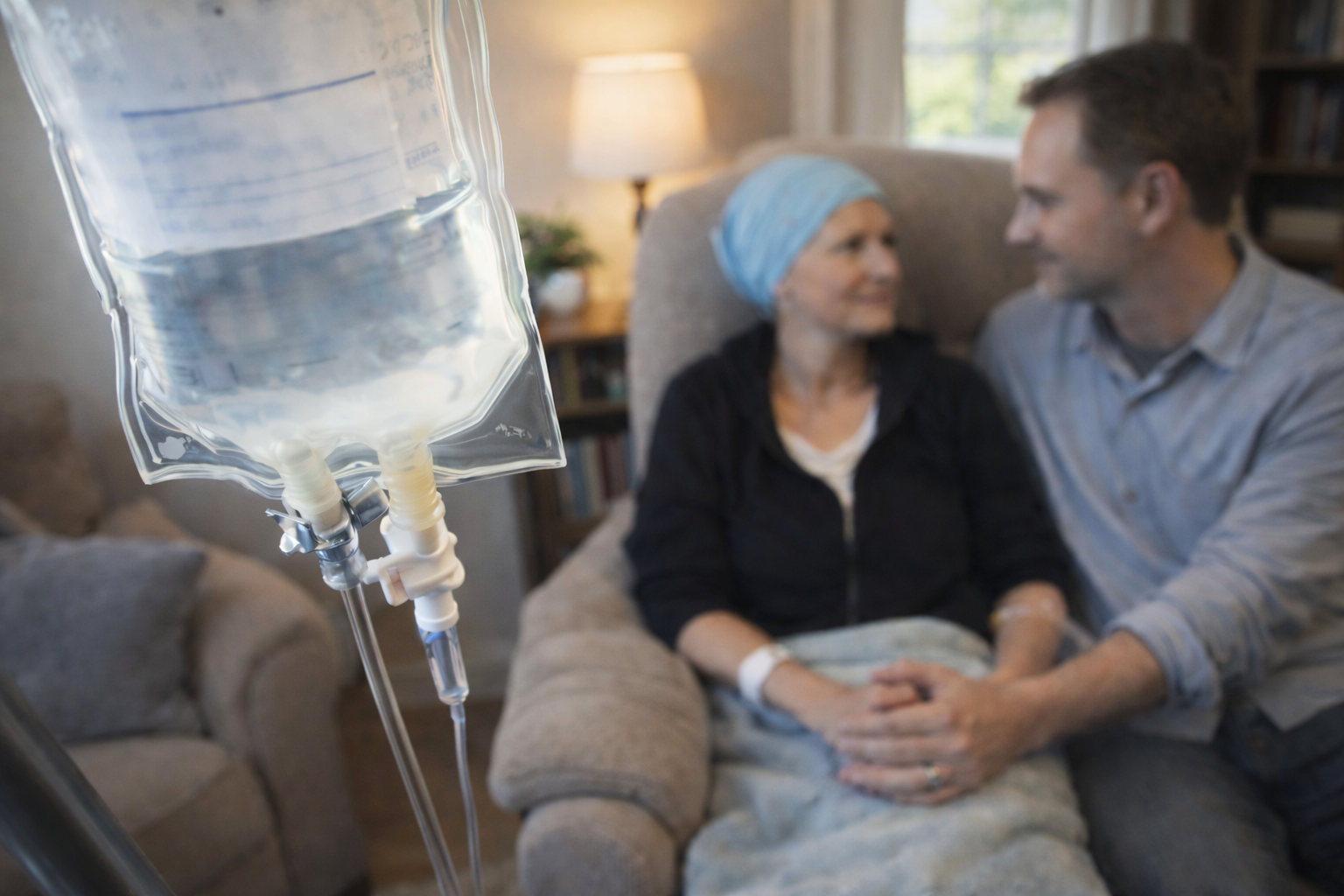
Suitable For
High-dose IV vitamin C may be considered by individuals undergoing cancer treatment who are seeking supportive, integrative wellness care under physician supervision. It is offered as an adjunctive supportive service and is not a substitute for oncology-directed treatment.
Intravenous administration allows vitamin C to reach blood concentrations far exceeding those achievable with oral intake, which is necessary to potentially reach pro-oxidant levels that cannot be achieved through diet or standard supplements. The clinical relevance of these levels varies among individuals and remains an area of ongoing research.
This service requires medical evaluation, laboratory screening, and coordination with the patient’s oncology care team, and is not appropriate for everyone.
Patients should consult their oncology care team before adding any supportive therapies.
What to Expect
Before starting, patients undergo a medical review and required laboratory screening, including assessment of G6PD status and kidney function. Ongoing laboratory monitoring is performed throughout therapy to support patient safety.
Infusions are delivered using a carefully monitored dose-escalation approach based on individual tolerance and clinical assessment. Dosing is conservatively limited to a maximum allowable level appropriate for the outpatient setting. Infusion sessions typically last approximately 45 to 90 minutes, depending on dose and individual tolerance.
Sessions are generally scheduled 48–72 hours after chemotherapy and are not administered on the same day.
When clinically indicated, medications such as anti-nausea, anti-inflammatory, or allergy-related agents may be provided during the session at no additional charge.

Transparent Pricing
AQUA HIGH-DOSE VITAMIN C sessions are priced on a per-session basis, starting at $300 for initial dosing and increasing based on dose and clinical tolerance, up to $450 for higher or maintenance doses when appropriate.
Adjunct medications may be administered at the clinician’s discretion when medically appropriate, including anti-nausea, anti-inflammatory, or allergy-related agents, at no additional charge.
Frequently Asked Questions
What is the goal of high-dose IV vitamin C?
High-dose IV vitamin C is provided as adjunctive, non-curative oncology supportive care to complement standard cancer treatment and support overall well-being. It is not a cancer treatment and does not replace chemotherapy, radiation, surgery, or other oncology care.
Is AQUA HIGH-DOSE VITAMIN C safe?
When appropriate screening is completed and therapy is administered conservatively under medical supervision, high-dose IV vitamin C is generally well tolerated.
Our protocol follows a stepwise escalation model, allowing clinicians to assess tolerance before increasing the dose. Patients are monitored during each infusion, and treatment decisions are guided by ongoing clinical assessment and laboratory monitoring.
We work in coordination with your oncology care team, and high-dose IV vitamin C is not initiated until all involved parties are informed and timing considerations are addressed. Doses used in our protocol are carefully selected for outpatient administration, with safety, renal function, and oncology coordination in mind.
As with any intravenous therapy, potential risks exist, and treatment may be modified, delayed, or discontinued at any time if safety concerns arise.
What scientific evidence supports high-dose IV vitamin C?
Chen, Q., Espey, M.G., Krishna, M.C., et al. (2005). Pharmacologic ascorbate selectively kills cancer cells: Action as a pro-drug to deliver hydrogen peroxide to tissues. Proceedings of the National Academy of Sciences, 102(38), 13604–13609. https://doi.org/10.1073/pnas.0506390102
Doskey, C.M., Buranasudja, V., Wagner, B.A., et al. (2016). Tumor cells have decreased ability to metabolize hydrogen peroxide: Implications for pharmacologic ascorbate in cancer therapy. Redox Biology, 10, 274–284. https://www.ncbi.nlm.nih.gov/pmc/articles/PMC4948165
Schoenfeld, J.D., Sibenaller, Z.A., Mapuskar, K.A., et al. (2017). O2·− and H2O2-mediated disruption of Fe metabolism causes ascorbate-induced cytotoxicity. Cancer Cell, 31(4), 487–500. https://www.ncbi.nlm.nih.gov/pmc/articles/PMC5381122
Mikirova, N., Casciari, J., Hunninghake, R., & Riordan, N. (2012). Intravenous ascorbic acid to prevent and treat cancer-associated sepsis. Journal of Translational Medicine, 10, 189. https://translational-medicine.biomedcentral.com/articles/10.1186/1479-5876-10-189
National Cancer Institute. (2024). Vitamin C (PDQ®)–Health Professional Version. https://www.cancer.gov/about-cancer/treatment/cam/hp/vitamin-c-pdq
Yun, J., Mullarky, E., Lu, C., et al. (2015). Vitamin C selectively kills KRAS and BRAF mutant colorectal cancer cells by targeting GAPDH. Science, 350(6266), 1391–1396. https://www.science.org/doi/10.1126/science.aaa5004
Do I need lab testing before high-dose IV vitamin C?
Yes. Appropriate screening and laboratory review are important before starting high-dose IV vitamin C. Renal function, treatment timing, and overall clinical status should be evaluated to help determine whether therapy is appropriate and to support safe outpatient administration.
Can high-dose IV vitamin C be given alongside chemotherapy or radiation?
High-dose IV vitamin C may be considered as adjunctive supportive care alongside standard oncology treatment, but timing and coordination are essential. We work closely with the patient’s oncology care team so infusion timing, safety considerations, and treatment goals are addressed before therapy is started.
Supportive Care During Cancer Treatment
AQUA HIGH-DOSE Vitamin C provides a carefully guided, supportive IV option for those seeking added comfort and hydration—because every step of this journey deserves care and support.
Mobile IV Therapy Near You: Our Service Locations
Our team provides on-demand IV therapy at your location, helping you recover faster and maintain optimal hydration and wellness.