IV Therapy for cancer support Across the Kitsap Peninsula
Compassionate, physician-directed supportive hydration care—providing clinical comfort to patients from Poulsbo to Gig Harbor
Physician-Led Supportive IV Regimen with Hydration
We provide supportive IV therapy designed to maintain hydration and nutrient levels during challenging treatments. Our team offers professional, clinical care in the peace of your own home—available throughout Kitsap County, including:
- North Kitsap: Poulsbo & Bainbridge Island
- Central Kitsap: Silverdale & Bremerton
- South Kitsap: Port Orchard
- Gig Harbor

What Is Supportive IV Therapy During Cancer Care?
Cancer treatment can place significant demands on the body’s hydration, nutrition, and overall energy levels. Fatigue, dehydration, nausea, and nutrient depletion are common side effects that can leave individuals feeling drained during treatment. Therapies such as chemotherapy, radiation, and certain medications may contribute to these symptoms, making daily comfort and recovery more challenging.
Maintaining proper hydration and nutrient balance can sometimes be difficult during cancer care. Nausea, reduced appetite, treatment-related side effects, and fatigue may make it harder to maintain adequate fluid intake, which can contribute to dehydration and electrolyte imbalance.
Across the Kitsap Peninsula—including Bremerton, Gig Harbor, Tacoma, Silverdale, many individuals undergoing cancer treatment seek supportive options to help maintain hydration, comfort, and overall wellness during their care journey.
Cancer treatment can take a toll on your body — but supportive care options are available. While IV therapy is not a treatment for cancer, it may provide supportive benefits during your care journey. Hydration and nutrient infusions may help:
• Replenish fluids
• Ease discomfort
• Support nutritional balance
• Promote overall wellness
For individuals seeking additional supportive options, we also offer *High-Dose Vitamin C infusions as an optional wellness service. While this therapy is not a substitute for oncology-directed treatment, some individuals explore it as part of their integrative wellness plan. Our team can help determine whether this service may be a suitable option based on our clinical protocol.
Mobile IV therapy allows these supportive hydration services to be delivered safely and comfortably in your home, helping you focus on rest and recovery during your treatment journey.
Always consult with your oncology team before adding any supportive therapies.
*Appropriate medical screening and ongoing laboratory monitoring are required before and during treatment
Common Cancer Treatment-Related Symptoms
• Persistent fatigue or low energy
• Nausea or reduced appetite
• Dizziness or lightheadedness
• Difficulty concentrating or “brain fog”
• General weakness or body discomfort
• Dehydration related to treatment side effects
Cancer treatment and related therapies can sometimes affect energy levels, hydration status, and overall comfort. Treatments such as chemotherapy, radiation, or certain medications may contribute to symptoms like fatigue, nausea, dehydration, and reduced appetite. These effects can make daily activities more challenging and may slow recovery during treatment.
When the body becomes dehydrated or nutritionally depleted, symptoms such as weakness, dizziness, fatigue, and difficulty concentrating may become more noticeable. Supporting hydration and maintaining electrolyte balance can play an important role in helping the body stay comfortable and resilient during cancer care.

How IV Therapy Can Help
IV hydration and nutrients help replenish what your body loses during chemotherapy, radiation, or illness.
Benefits of Cancer Support IV Therapy:
- Helps restore hydration following treatment
- Supports replenishment of essential vitamins and minerals
- May help ease treatment-related nausea and fatigue
- Designed to support immune health and recovery
- Aims to promote improved energy levels and overall comfort
- High-dose Vitamin C infusions, when used as an adjunct, may be explored by some individuals to support quality of life and treatment-related comfort as part of an integrative care approach
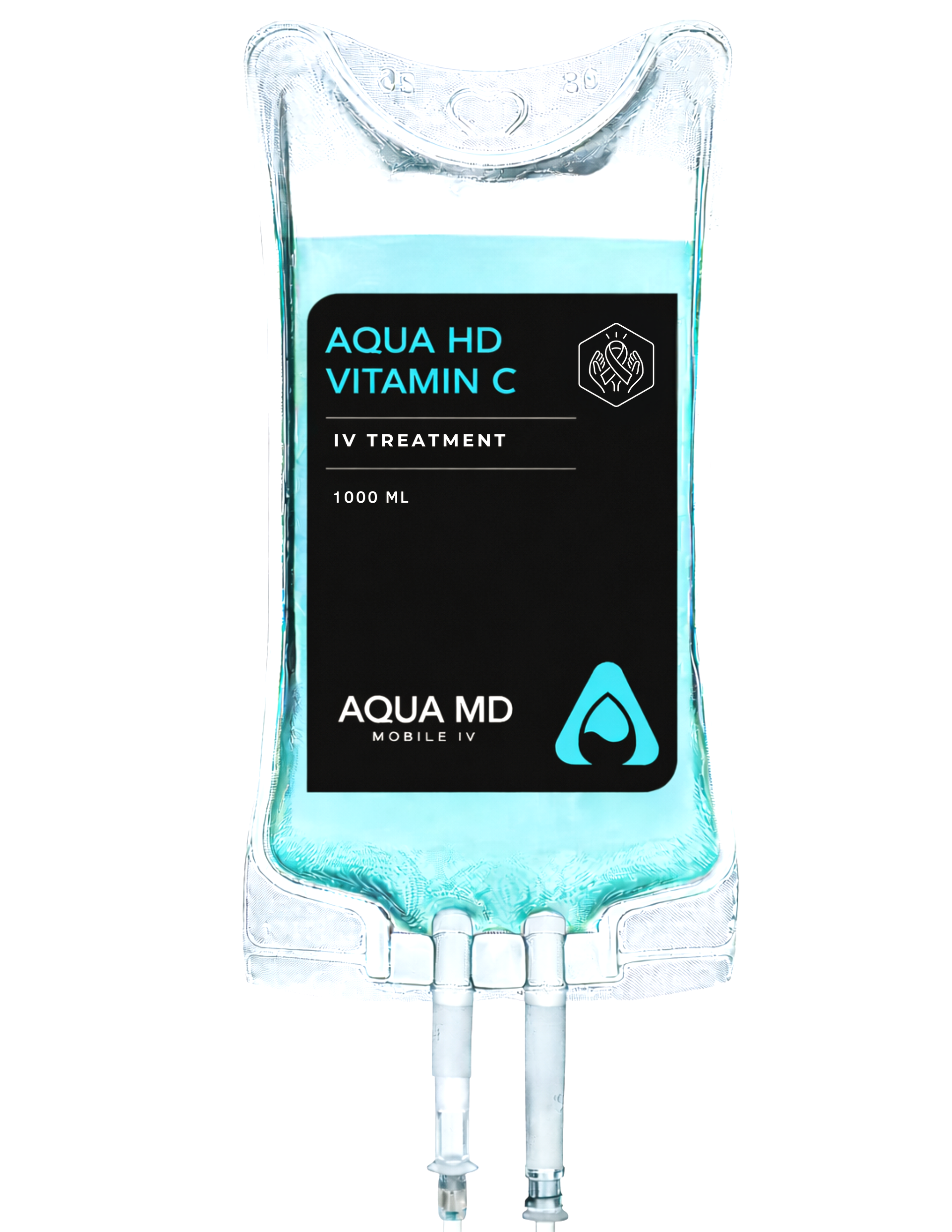
Adjunctive Supportive IV Option
AQUA HIGH-DOSE VITAMIN C – $300-$450
AQUA HIGH-DOSE VITAMIN C is offered as a supportive wellness service for eligible individuals undergoing cancer treatment. This infusion focuses on hydration, antioxidant support, and overall comfort during chemotherapy or oncology care.
Medical evaluation, appropriate screening, and coordination with your oncology team are required prior to treatment.
What’s Inside Your Treatment
Core Ingredients
- 0.9% Sodium Chloride (1,000mL)
- Vitamin C (Ascorbic Acid – Preservative Free)
When clinically indicated and in the absence of contraindications, supportive medications—such as anti-nausea, anti-inflammatory, or allergy-related agents—may be provided during the session at no additional charge.
This service is offered as supportive wellness care and is not intended to diagnose, treat, cure, or prevent disease. Clinical relevance may vary and remains an area of ongoing investigation. Individual outcomes are not guaranteed.
Relief Delivered Wherever You Are
Whether you’re recovering at home in Bremerton, resting in Poulsbo, or staying in Silverdale, our licensed nurses bring cancer support IV therapy to you.
Appointments usually last 45-120 minutes and are performed in the comfort of your home ore care facility.
Why Choose Us
Trusted, Professional, Local

Mobile Service Across the Kitsap Peninsula
Safe hydration wherever you need it.

Experienced, Licensed Nurses
Skilled professionals with clinical expertise.

Gentle, Supportive Care
Comfort and compassion are our priorities.

Flexible Scheduling
Book treatments around your schedule.
We’re here to support you every step of the way.
Optional Supportive Add-on Services
Note: Add-on services are offered as separate treatments and require medical director approval.
Our medical director and nursing staff will guide you safely through your options.
- B-Complex Vitamins for energy
- Magnesium to ease muscle tension
- Extra fluids for deeper hydration
- B12 for focus and stamina
- Ketorolac for pain relief
- Ondansetron for nausea prevention
Your nurse will coordinate with your provider to ensure safety.

Frequently Asked Questions
Is IV therapy safe during cancer treatment?
In some cases, supportive IV hydration and nutrient infusions may be used alongside cancer treatment to help manage symptoms such as dehydration, fatigue, or nausea. However, every patient’s situation is different. If you are undergoing chemotherapy, radiation therapy, or other oncology treatments, it is important to discuss IV therapy with your oncology team before scheduling treatment. Our providers review your medical history and current treatments to ensure IV therapy is appropriate and safe for your situation.
How soon will I feel better?
Many patients begin to feel improvements in hydration and energy levels during or shortly after the infusion. Because fluids and nutrients are delivered directly into the bloodstream, they bypass the digestive system and become available for the body to use immediately. The degree of symptom improvement may vary depending on factors such as dehydration level, treatment side effects, and overall health.
Can I book recurring appointments?
Yes. Some patients choose to schedule recurring IV hydration sessions to support ongoing hydration and wellness during periods of increased fatigue, treatment-related symptoms, or recovery. Recurring appointments can often be arranged based on your individual needs and provider recommendations.
What symptoms can supportive IV therapy help address during cancer care?
Supportive IV hydration may help address symptoms that commonly occur during cancer treatment, such as dehydration, fatigue, nausea, or reduced appetite. Hydration and electrolyte support can be particularly helpful when patients have difficulty maintaining adequate fluid intake due to treatment-related side effects.
Who administers cancer support IV therapy?
All infusions are administered by licensed healthcare professionals using sterile, medical-grade equipment and provided under physician oversight. Before treatment begins, patients complete a screening process to review their medical history, medications, and current health conditions to ensure the infusion is appropriate.