AQUA MD
Perioperative IV Hydration & Physiologic Recovery Support
An Adjunctive Option for Surgical Wellness Before and After Your Procedure — Backed by Physician-Directed Care
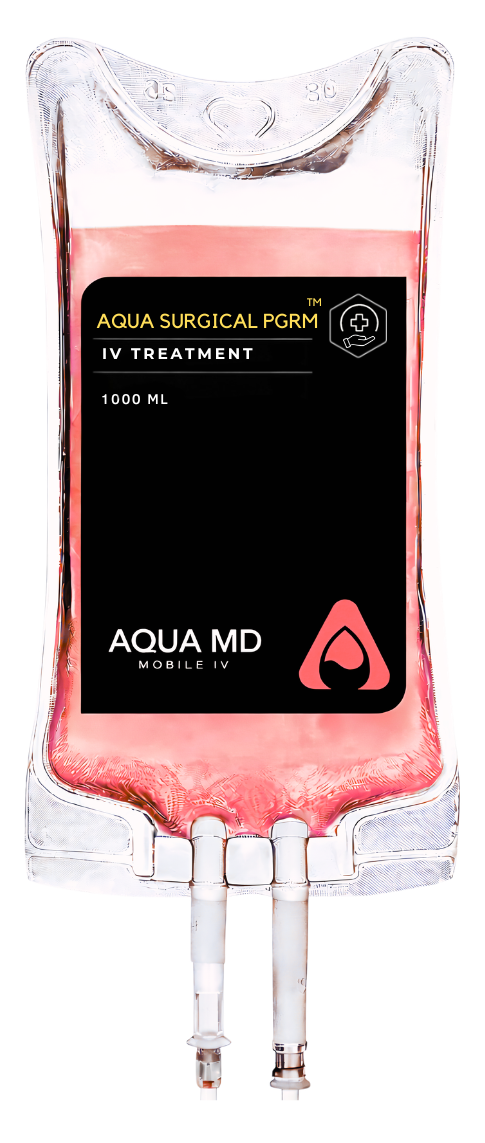
What’s Inside AQUA MD SURGICAL HYDRATION & RECOVERY PROGRAM™
Individually Tailored IV Hydration & Recovery Support:
Physician-guided mobile IV hydration therapy designed to support hydration, electrolyte balance, comfort, and wellness before and after surgery or medical procedures.
Each treatment is individualized based on clinical assessment, surgical timing, symptoms, medications, medical history, and peri-operative considerations.
Therapy may include balanced isotonic fluids, electrolytes, clinically appropriate medications, and optional nutrient support when appropriate.
By delivering fluids directly into the bloodstream, IV hydration therapy may help during periods when oral hydration or nutrition is limited or poorly tolerated after surgery or procedures [1].
Hydration and electrolyte support may help maintain normal circulation, muscle function, nerve signaling, and overall physiologic balance during recovery.
When clinically appropriate, therapy may include:
- Nausea Management
Medications may be considered to help manage nausea or reduced oral intake during the peri-operative period.
- Mild Inflammation and Discomfort
Selected therapies may help promote general comfort during recovery.
- General Symptom Relief
Treatment may be tailored for fatigue, weakness, lightheadedness, or reduced intake when appropriate.
- Vitamin and Nutrient Support
Selected vitamins and nutrients may be included to support antioxidant balance, immune function, relaxation, tissue repair, and normal recovery physiology [2].
*This service is intended to support hydration, electrolyte balance, and overall wellness before and after surgery or medical procedures. It is not a substitute for hospital care, anesthesia care, emergency care, surgical follow-up, or instructions from your surgical team. Individual responses may vary, and outcomes are not guaranteed.
Medical screening and clinical assessment are required prior to treatment.
[1] Miller TE, Roche AM, Mythen M. Fluid management and goal-directed therapy as an adjunct to Enhanced Recovery After Surgery (ERAS).
https://pubmed.ncbi.nlm.nih.gov/25391735/
[2] Seth I, Lim B, et al. Impact of nutrition on skin wound healing and aesthetic outcomes: A comprehensive narrative review. Journal of Clinical Medicine. 2024;13(3):654.
https://pmc.ncbi.nlm.nih.gov/articles/PMC10874171/
When To Drip
Pre-Operative Hydration Support

Post-Operative Recovery Support

Reduced Oral Intake

Fatigue, Weakness & Lightheadedness

Suitable For
AQUA MD Surgical Hydration & Recovery Program™ is designed for patients seeking physician-directed hydration and wellness support before or after surgery or medical procedures.
This program may be especially helpful for individuals experiencing:
- Reduced oral intake
- Mild dehydration
- Fatigue or weakness
- Lightheadedness
- Nausea
- Increased physiologic stress surrounding surgery or recovery
Patients are encouraged to coordinate with their surgeon, primary care provider, or specialist to ensure IV therapy is appropriate within their overall care plan.
Patients may choose from three flexible options:
AQUA MD Pre-Operative Hydration & Support™
For patients seeking hydration and electrolyte support before surgery.
AQUA MD Post-Operative Recovery & Support™
For patients seeking hydration, electrolyte balance, and comfort-focused wellness support after surgery.
Combined Surgical Hydration & Recovery Program™
A combined pre- and post-operative option for patients seeking more comprehensive peri-operative hydration and recovery support.
When clinically appropriate, supportive nutrients or medications may be included at no additional charge as part of the individualized treatment plan.
What to Expect
Patients complete a medical screening and clinical assessment prior to treatment to determine whether IV therapy is safe and appropriate.
Pre-operative sessions are typically scheduled 12–24 hours before surgery when clinically appropriate.
Post-operative sessions are commonly scheduled within 7 days after surgery depending on symptoms, recovery status, and clinical considerations.
Appointments generally last 45–90 minutes depending on the individualized treatment protocol.
Infusions are administered under physician direction using conservative outpatient treatment protocols focused on hydration, safety, and overall comfort.
Treatment may be modified, delayed, or declined at any time based on clinical judgement and patient safety considerations.
Important Safety & Care Considerations:
AQUA MD Surgical Hydration & Recovery Program™ is intended to support hydration, electrolyte balance, and overall comfort before and after surgery or medical procedures.
This service does not replace:
- Surgical care
- Hospital care
- Anesthesia care
- Emergency medical treatment
- Post-operative follow-up instructions from your surgical team
This service is not intended to diagnose, treat, or manage surgical complications or acute medical emergencies.
Patients should continue following all instructions provided by their surgeon and medical team, including fasting guidelines, medication directions, wound care instructions, and activity restrictions.
Individual responses vary and outcomes are not guaranteed.
If you experience chest pain, shortness of breath, uncontrolled vomiting, significant bleeding, fever, confusion, worsening pain, severe weakness, or other concerning symptoms, seek immediate medical evaluation.
Transparent Pricing
AQUA MD Pre-Operative Hydration & Support™ — $300
AQUA MD Post-Operative Recovery & Support™ — $300
AQUA MD Surgical Hydration & Recovery Program™ — $500
When clinically appropriate, adjunct medications, nutrients, or comfort-focused supportive therapies may be included at the Medical Director’s discretion as part of the individualized treatment plan, at no additional charge.
If you are looking for wellness support beyond the peri-operative period, including more than 7 days after surgery, explore our additional
IV Treatments
designed to help support hydration, recovery, immune function, energy, and overall health.
Frequently Asked Questions
Can I choose only the pre-op or only the post-op treatment?
Yes. You may choose pre-operative support, post-operative support, or the combined pre- and post-operative program depending on your surgical timeline and recovery needs.
Do I need to tell my surgeon or anesthesia team?
Yes. Patients are encouraged to inform their surgeon and anesthesia provider about any IV fluids, medications, or additives received before or after surgery.
Can this help if I am fasting before surgery?
Possibly, but timing matters. Pre-operative IV therapy is typically scheduled 12–24 hours before surgery when clinically appropriate and should not conflict with your surgical team’s fasting or medication instructions.
Does this treatment replace drinking fluids after surgery?
No. Oral hydration remains important when allowed by your surgical team. IV therapy may provide additional support when intake is reduced, poorly tolerated, or temporarily limited.
Can this help with nausea, discomfort, or pain after surgery?
When clinically appropriate, supportive medications or comfort-focused options may be included to help with nausea, mild discomfort, or inflammation during recovery.
This program is not a replacement for your prescribed pain plan, and persistent nausea, severe pain, worsening symptoms, or concerning post-operative changes should be evaluated by your surgical team.
From Preparation to Recovery, Clinical Support for Your Surgical Journey in the Comfort of Your Home
Whether you are preparing for a procedure, recovering at home, or seeking a more supported peri-operative experience, AQUA MD Surgical Hydration & Recovery Program™ delivers a refined, physician-directed approach tailored to your clinical needs.
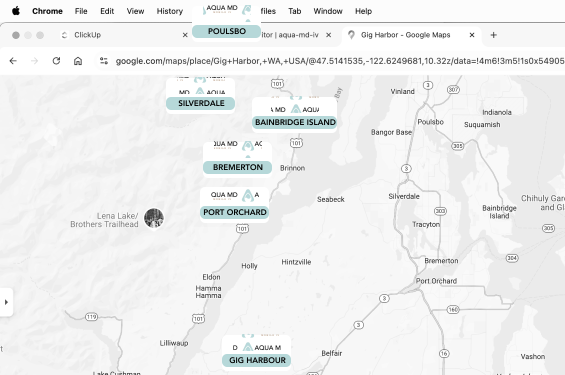
Mobile IV Therapy Near You: Our Service Locations
Our team provides on-demand IV therapy at your location, helping you recover faster and maintain optimal hydration and wellness.