
Iron Infusion in Kitsap County: What to Expect Before, During, and After Treatment
Fatigue that doesn’t improve with rest, shortness of breath with simple activity, or persistent dizziness and brain fog can all point to something deeper.
For many adults in Kitsap County, these symptoms may be linked to iron deficiency—a condition that can significantly impact daily function and overall well-being. When oral supplements aren’t enough or aren’t well tolerated, AQUA IronCore™ iron infusion therapy may be considered as a medically guided option to help restore iron levels more efficiently
Some symptoms of iron deficiency can overlap with other conditions such as dehydration or illness. If you’re unsure where to start, you may find it helpful to review our guides on persistent dehydration in Silverdale and IV therapy for illness recovery, which outline when hydration alone may—or may not—be enough.
Serving Bremerton, Silverdale, Poulsbo, Port Orchard, Bainbridge Island, Gig Harbor, and the greater Kitsap County area, AQUA MD provides physician-directed mobile IV therapy—delivering care directly to your home with a focus on safety, convenience, and clinical support.
What Is an Iron Infusion?
An iron infusion is a physician-directed intravenous treatment that delivers iron directly into the bloodstream. By bypassing the digestive system, IV iron allows for more efficient absorption compared to oral supplements [1].
This approach may be appropriate for individuals with:
- Confirmed iron deficiency or iron deficiency anemia
- Poor tolerance to oral iron
- Conditions affecting iron absorption
- Increased iron needs or ongoing blood loss
Intravenous iron therapies such as iron sucrose have been shown to be effective in improving iron levels, hemoglobin, and overall clinical outcomes in patients with iron deficiency [2].
Who May Benefit from Iron Infusion Therapy?
Iron deficiency can present in subtle and not-so-subtle ways. Common symptoms include:
- Persistent fatigue or low energy
- Dizziness or lightheadedness
- Shortness of breath
- Headaches or brain fog
- Pale skin or reduced exercise tolerance
If these symptoms are ongoing despite hydration and nutrition, further evaluation may be appropriate to determine if iron deficiency is a contributing factor.

Before Your Iron Infusion
Safety and appropriateness come first. Before treatment, you can expect:
- Medical review and screening
- Laboratory evaluation to confirm iron deficiency
- Assessment of underlying causes when appropriate
Iron infusion therapy is not a general wellness service—it is reserved for individuals with confirmed clinical need.
What Happens During the Infusion
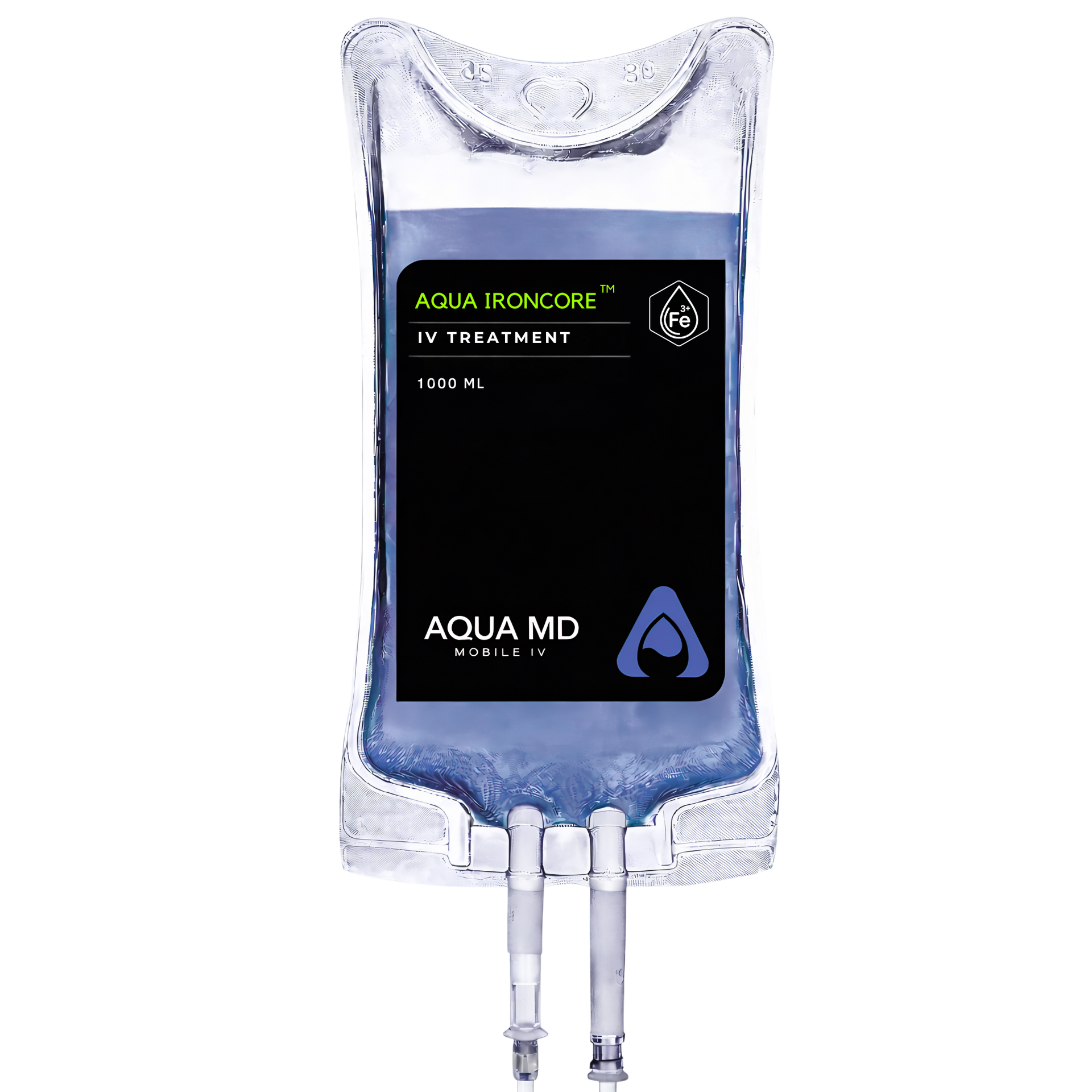
Our AQUA IronCore™ protocol follows a structured, physician-directed approach that includes individualized dosing, repletion and maintenance phases, and ongoing laboratory monitoring to support safe and effective iron repletion.
During an infusion:
- Iron is administered intravenously over a controlled period
- Infusion times typically range from 45 to 90 minutes depending on dose and protocol [3]
- Patients are monitored during and after the infusion for safety
- Clinical guidelines recommend observation during and after administration, as most reactions—if they occur—happen within the first 30 minutes [4].
For mobile services in Kitsap County—including Silverdale, Bremerton, Poulsbo, and Bainbridge Island—treatment is delivered in the comfort of your home.
After the Infusion: What to Expect
Response to IV iron varies by individual and severity of deficiency. Clinical studies show that IV iron therapy:
- Improves iron stores (ferritin, transferrin saturation)
- Increases hemoglobin levels
- May improve energy and functional status over time [2]
Some individuals notice symptom improvement within days, while full correction may take several weeks.
Treatment plans may include:
- A single infusion
- A series of infusions totaling approximately 1000 mg of iron repletion in many protocols [5]

Follow-up laboratory testing helps guide ongoing care.

Is Iron Infusion Safe?
When administered appropriately, IV iron therapy is generally well tolerated.
However, potential risks include:
Mild symptoms (headache, nausea, dizziness)
Hypotension
Rare hypersensitivity reactions
For this reason, guidelines recommend:
Administration in a monitored setting
Availability of trained personnel and emergency management resources [4]
Iron Infusion vs Oral Iron
Oral iron is often first-line, but may be limited by:
- Gastrointestinal side effects
- Poor absorption
- Slow response
IV iron may be considered when faster or more reliable repletion is needed, particularly in patients who do not respond adequately to oral therapy [1].
Final Thoughts
Iron deficiency can significantly impact quality of life, but it is also a condition that can be effectively addressed with proper evaluation and treatment.
AQUA IronCore™ iron infusion therapy provides a structured, physician-directed approach to iron repletion—delivered with clinical oversight and convenience for patients across Kitsap County.
References
[1] Intravenous iron infusion overview and clinical use
https://en.wikipedia.org/wiki/Intravenous_iron_infusion
[2] Cançado RD et al. Efficacy and safety of intravenous iron sucrose
https://pmc.ncbi.nlm.nih.gov/articles/PMC3459362/
[3] Venofer® (iron sucrose) dosing and administration guidelines
https://www.venofer.com/dosing
[4] Venofer® safety information and monitoring recommendations
https://www.venofer.com/safety
[5] Medscape: Iron sucrose dosing and treatment protocols
https://reference.medscape.com/drug/venofer-iron-sucrose-342162
Frequently Asked Questions (FAQ)
Do I need lab work before receiving an iron infusion?
Yes. Iron infusion therapy requires laboratory confirmation of iron deficiency or iron deficiency anemia prior to treatment. This ensures that therapy is appropriate, safe, and medically indicated.
How many iron infusions will I need?
Treatment varies based on severity and individual response. Some patients may require a single session, while others benefit from a short series. A structured, physician-directed protocol with repletion and maintenance phases and follow-up labs helps guide treatment.
How long does an iron infusion take?
Infusion times vary depending on the formulation and dose, but most sessions are completed within approximately 45 to 90 minutes, followed by a brief observation period.
How quickly will I feel better after an iron infusion?
Some individuals notice gradual improvement in energy and symptoms within a few days, while full benefits may take several weeks as iron stores are replenished and red blood cell production improves.
Is iron infusion therapy safe?
When administered under proper medical supervision and after appropriate screening, iron infusion therapy is generally well tolerated. As with any medical treatment, potential risks and side effects are reviewed prior to administration.