



IV Therapy for POTS: Can Hydration Help with Fatigue, Dizziness, and Brain Fog?
Postural Orthostatic Tachycardia Syndrome (POTS) is a complex condition that can significantly affect daily life. Symptoms like fatigue, dizziness, brain fog, nausea, and lightheadedness often make even simple activities feel overwhelming.
Living with POTS can sometimes feel like waking up already depleted—fatigued, foggy, dizzy, and struggling to function throughout the day. While increasing fluid and electrolyte intake is often recommended, there are situations where oral hydration alone may not be enough to keep symptoms under control. This is where IV therapy may offer additional support.
For individuals in Kitsap County experiencing more persistent or severe symptoms, mobile IV hydration therapy has become an increasingly discussed option for supporting hydration and circulatory stability—especially when low blood volume and electrolyte imbalance are contributing factors.
Serving Bremerton, Silverdale, Poulsbo, Port Orchard, Bainbridge Island, Gig Harbor, and the greater Kitsap County, AQUA MD delivers mobile IV therapy directly to you—helping support hydration, electrolyte balance, and overall wellness in the comfort of your home.

What Is POTS?
POTS is a form of autonomic dysfunction where the body has difficulty regulating heart rate and blood flow when moving from lying down to standing. This can lead to:
- Rapid heart rate
- Lightheadedness or dizziness
- Fatigue
- Brain fog
- Nausea
These symptoms are often related to circulatory instability and low blood volume (hypovolemia) [1].
Why Hydration Matters in POTS
Hydration is one of the cornerstones of POTS management.
When standing, blood naturally shifts downward in the body. In POTS, this process is exaggerated, leading to reduced blood flow to the brain. Increasing fluid and sodium intake helps expand blood volume and improve circulation [1][3].
Many symptoms overlap with dehydration—learn more about IV therapy for dehydration and how targeted hydration may help support recovery.
However, not all patients can maintain adequate hydration through oral intake alone, especially those with nausea or gastrointestinal symptoms [3]. If your symptoms are related to persistent dehydration, you can also read our guide on when IV hydration may help in Silverdale.
Common Symptoms Patients Experience
POTS symptoms can vary widely, but commonly include:
- Persistent fatigue
- Brain fog or difficulty concentrating
- Dizziness or near-fainting
- Nausea and poor appetite
If nausea is a limiting factor, explore how nausea IV therapy may help improve hydration tolerance. For a deeper look at managing nausea at home, see our guide on nausea relief with mobile IV therapy in Bainbridge Island.
These symptoms often worsen during illness, stress, heat exposure, or prolonged standing [1].

Can IV Therapy Help POTS Symptoms?
IV therapy delivers fluids directly into the bloodstream, bypassing the digestive system. This allows for rapid hydration and temporary expansion of blood volume.
Some studies and clinical observations suggest that IV fluids may:
- Improve dizziness and orthostatic tolerance
- Reduce fatigue and brain fog
- Provide short-term symptom relief
Hydration strategies aim to expand intravascular volume and improve cerebral perfusion, which may help stabilize symptoms [1].
Additionally, small observational studies and patient-reported data have described symptom improvement in some individuals receiving intermittent IV fluids [2][4].
Learn more about our POTS IV therapy options designed to support hydration and overall wellness.
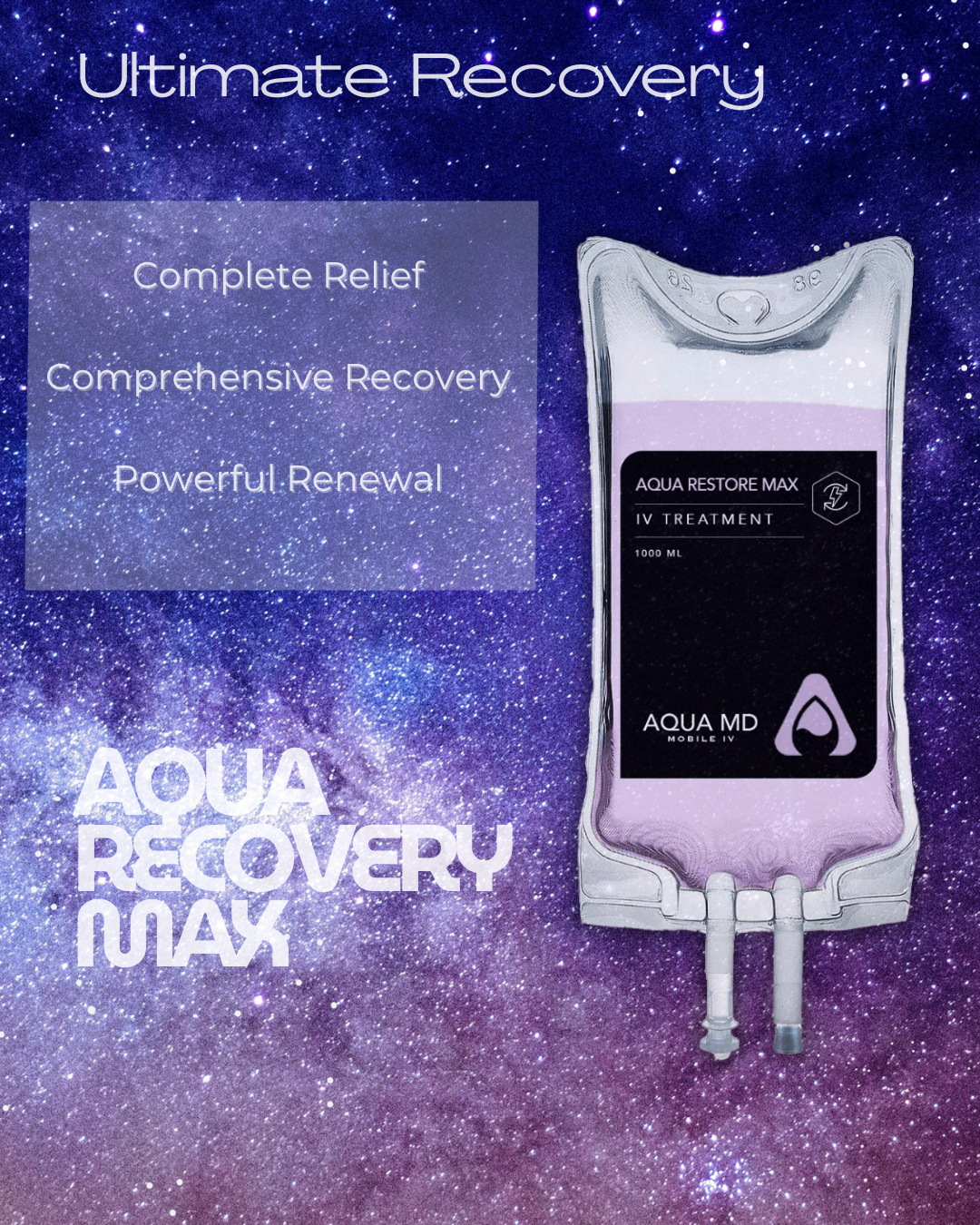
In clinical practice, hydration protocols are often tailored to the individual. At AQUA MD, options like our AQUA Recovery MAX infusion are designed to support hydration, electrolyte balance, and overall recovery—particularly for patients experiencing fatigue, brain fog, or symptom flares related to conditions like POTS. These formulations are used as supportive care and are customized based on clinical assessment.
Important Considerations
While IV therapy may provide relief in certain situations, it is important to understand:
- Oral hydration and salt intake remain first-line treatments [3]
- IV therapy is typically considered for:
- Severe symptoms
- Inability to tolerate oral fluids
- Acute symptom flares
Medical organizations note that routine long-term IV fluid use is not strongly supported by high-quality evidence and should be individualized [3].
Like any medical treatment, IV therapy should be guided by a qualified healthcare provider.
When to Consider IV Therapy for POTS
You may consider IV therapy if you experience:
- Persistent dehydration despite drinking fluids
- Severe fatigue or brain fog affecting daily function
- Frequent nausea limiting oral intake
- Symptom flares during illness or travel
Stress can contribute to worsening symptoms—learn how our stress relief IV therapy may help support recovery. When illness progresses, symptoms can intensify quickly—read our Bremerton guide on IV therapy for additional support.

Mobile IV Therapy for POTS in Kitsap County and Nearby Communities
For patients in Silverdale, Bainbridge Island, Poulsbo, Gig Harbor, and surrounding Kitsap County areas, mobile IV therapy offers a convenient option for receiving care at home.
Not all IV therapy services are the same. At AQUA MD, all treatments are physician-directed and nurse-administered, ensuring each infusion is guided by clinical judgment, safety protocols, and individualized patient needs. Treatments such as our AQUA Recovery MAX infusion are designed to support hydration, electrolyte balance, and overall wellness, and can be delivered in the comfort of your home—particularly during symptom flares.
Instead of traveling while symptomatic, care can be provided at home with:
Physician-directed protocols
Nurse-administered infusions
Personalized hydration and nutrient support
This approach can be especially helpful during periods of increased fatigue, dizziness, or difficulty maintaining hydration.
How IV Therapy Fits Into a Larger Plan
IV therapy is best viewed as supportive care, not a standalone treatment.
Most comprehensive POTS management plans include:
- Increased oral fluids and salt intake
- Medications when appropriate
- Lifestyle adjustments
- Gradual exercise programs
IV therapy may serve as a bridge or adjunct when symptoms are difficult to control [3].
Final Thoughts
POTS is a complex condition, and no single treatment works for everyone. Hydration plays a critical role, and in certain cases, IV therapy may provide meaningful short-term support—especially when oral intake isn’t enough [1][2].
If you're experiencing symptoms like fatigue, dizziness, or nausea, exploring targeted hydration strategies may be a helpful next step.
Explore Related Treatments
POTS symptoms often overlap with conditions like dehydration, fatigue, nausea, and stress—exploring targeted IV therapy for these areas may help support overall symptom management.
- IV therapy for dehydration
- Energy and focus IV therapy
- Nausea IV therapy
- Stress relief IV therapy
If you’re dealing with overlapping symptoms like headaches or fatigue, our guide on in-home migraine recovery with IV hydration may also be helpful.
If you're unsure whether your symptoms are related to dehydration or another condition, our breakdown of hangover recovery and hydration therapy in Silverdale provides additional insight into how IV therapy supports recovery.

References
- Snapper H, Cheshire WP. Oral and intravenous hydration in orthostatic disorders. Autonomic Neuroscience (2022).
https://pubmed.ncbi.nlm.nih.gov/35123367/ - Standing Up to POTS. Intravenous Fluids Guide (IV Saline Therapy).
https://www.standinguptopots.org/resources/iv-saline - PoTS UK. The role of intravenous (IV) fluids in POTS.
https://www.potsuk.org/managingpots/the-role-of-intravenous-iv-fluids-in-pots/ - Standing Up to POTS. Uses of IV fluids in POTS patients.
https://www.standinguptopots.org/livingwithpots/iv
Frequently Asked Questions About POTS and IV Therapy
1. Can IV therapy help with POTS symptoms?
IV therapy may help support hydration and temporarily improve symptoms like dizziness, fatigue, and brain fog in some individuals with POTS. By delivering fluids directly into the bloodstream, it can help expand blood volume when oral hydration alone isn’t enough. However, it is generally considered supportive care and should be guided by a healthcare provider.
2. Why is hydration important for POTS?
Hydration plays a key role in managing POTS because many symptoms are related to low blood volume and circulation issues. Increasing fluids and electrolytes may help improve blood flow and reduce symptoms like lightheadedness and fatigue.
You can also explore how IV therapy for dehydration supports hydration when oral intake is insufficient.
3. When should someone with POTS consider IV therapy?
IV therapy may be considered during symptom flares, when dehydration persists despite drinking fluids, or when nausea makes it difficult to maintain adequate hydration. It can also be helpful during illness or travel when symptoms tend to worsen.
4. Does IV therapy replace standard POTS treatment?
No, IV therapy does not replace standard treatment. Most POTS management plans include hydration, increased salt intake, medications, and lifestyle adjustments. IV therapy may be used as an additional supportive option in certain situations.
5. How long do the effects of IV therapy last for POTS?
The effects of IV therapy can vary from person to person. Some individuals may experience temporary improvement in symptoms for hours to a few days, while others may notice shorter or longer effects depending on their condition.
6. Can IV therapy help with POTS-related nausea?
Yes, IV therapy may help support hydration and symptom relief in individuals experiencing nausea related to POTS, especially when oral intake is limited.
Learn more about nausea IV therapy and how it can support hydration.
7. Is mobile IV therapy safe for POTS patients?
When provided under proper medical supervision, IV therapy is generally considered safe for appropriate patients. It’s important that treatments are guided by a qualified healthcare provider who understands your medical history.
8. What are common triggers that worsen POTS symptoms?
Common triggers include dehydration, heat exposure, illness, prolonged standing, stress, and lack of sleep. Managing these triggers is an important part of symptom control.
Stress can also play a role—explore how stress relief IV therapy may support recovery.
9. Do I need a diagnosis of POTS to receive IV therapy?
Not necessarily. Many patients seek IV therapy for symptoms like dehydration, fatigue, or nausea, even without a formal POTS diagnosis. However, discussing your symptoms with a healthcare provider is always recommended.
10. Is mobile IV therapy available in Kitsap County for POTS?
Yes, mobile IV therapy is available in Silverdale, Bremerton, Poulsbo, Bainbridge Island, Port Orchard, Gig Harbor, and surrounding Kitsap County areas. Services are delivered directly to your home, making it easier to receive care during symptom flares.