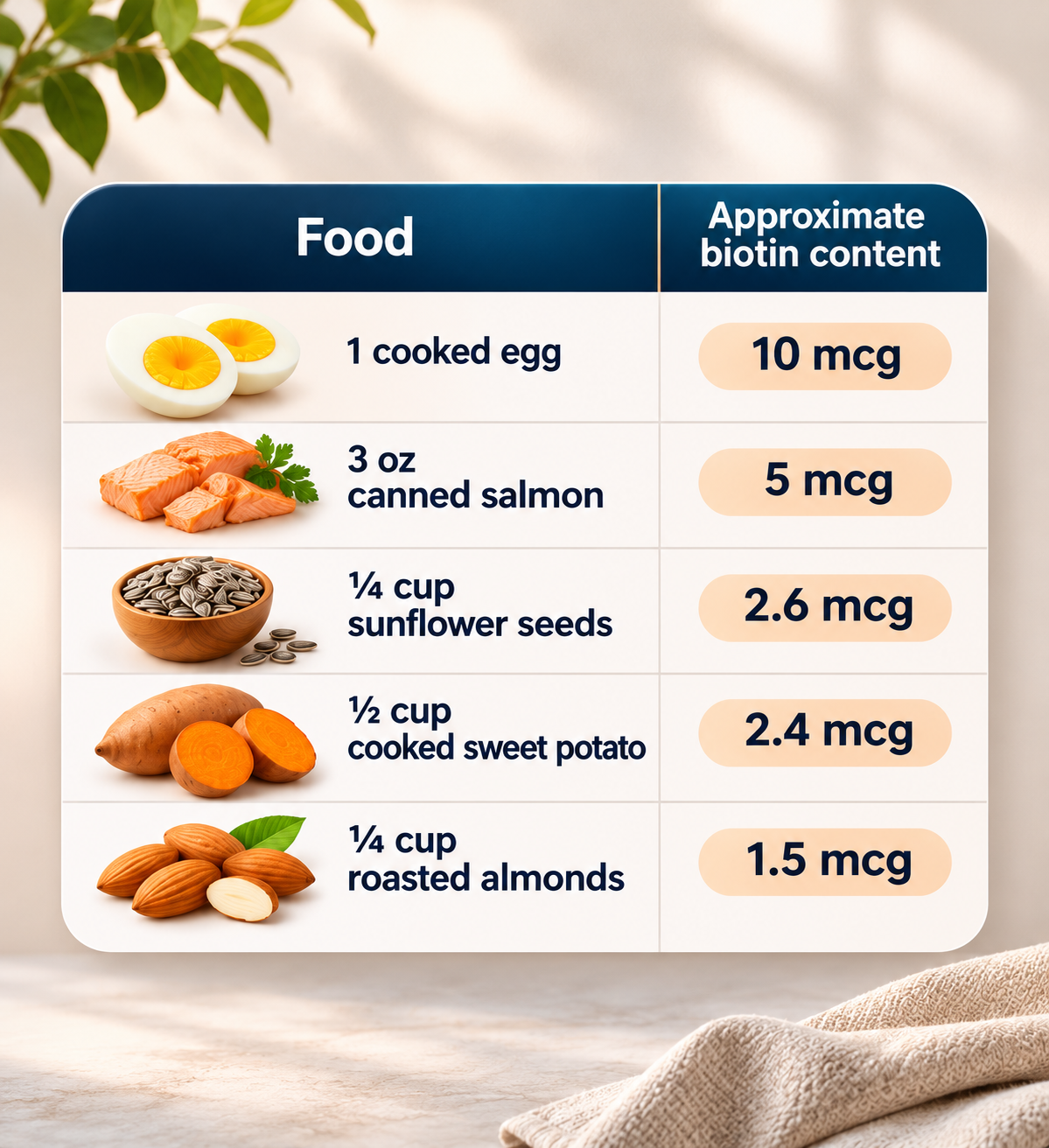
Other sources include meat, fish, organ meats, nuts, seeds, and certain vegetables [1].
A varied diet can provide adequate biotin without supplementation.
But if your meals are frequently rushed, repetitive, or inconsistent, a supplement can offer additional reassurance that you're meeting your daily nutritional requirements.
You don't need a complicated supplement routine. Sometimes, consistency is the most valuable part of a practical wellness plan.
Who Might Consider Taking a Biotin Supplement?
Biotin supplementation may be worth considering for several groups.
1. Busy professionals and shift workers
Long shifts, irregular meal schedules, and limited food choices can make balanced nutrition more challenging. A daily supplement can provide a convenient way to support consistent micronutrient intake.
2. Adults focused on hair, skin, and nail wellness
Biotin is an essential part of normal tissue health. Ensuring adequate intake is a sensible component of a broader nutritional wellness routine.
3. People with limited dietary variety
Individuals who avoid certain food groups or frequently rely on a narrow selection of foods may benefit from reviewing their overall micronutrient intake.
4. Adults building a proactive wellness routine
You don't have to wait until you notice a nutritional problem to pay attention to essential vitamins.
A standard-dose supplement can be one simple way to support adequate intake alongside healthy eating, hydration, and regular physical activity.
5. People with specific nutritional risk factors
Pregnancy, breastfeeding, certain anticonvulsant medications, chronic heavy alcohol consumption, and rare inherited conditions may affect biotin status [1].
These situations may warrant individualized guidance from a healthcare professional.
Being busy does not automatically mean you're biotin deficient. The value of routine supplementation is in helping meet nutritional requirements when your dietary intake may be inconsistent.
How Much Biotin Should You Take?
For most adults interested in everyday nutritional support, a supplement providing approximately
30 mcg daily can help meet the established adequate intake [1].
Biotin is commonly available as:
- Standalone biotin supplements
- B-complex vitamins
- Daily multivitamins
- Hair, skin, and nail formulations
Many beauty-focused supplements contain considerably higher doses, sometimes 2,500 to 10,000 mcg.
These higher amounts are not necessary simply to meet daily nutritional requirements, and larger doses do not automatically produce better results.
For routine wellness, a consistent, appropriately dosed supplement is a reasonable starting point.
Is It Safe to Take Biotin Every Day?
Biotin has a favorable safety profile, particularly at typical nutritional doses.
No tolerable upper intake level has been established because available evidence has not demonstrated toxicity from high biotin intake in humans [1].
However, there is one important consideration.
Biotin Can Affect Certain Blood Tests
Higher-dose biotin supplements can interfere with some laboratory tests, including thyroid function tests and certain cardiac troponin assays.
The FDA has issued safety communications about this interaction [7], and the American Society of Anesthesiologists has also highlighted the concern [8].
Professional laboratory guidance recommends assessing the dose, timing, and type of test when determining whether supplementation should be paused [9].
The practical takeaway: Always tell your healthcare provider and laboratory if you're taking biotin, particularly before blood work. Your clinician can advise whether any temporary interruption is needed.
For most people, this is simply another reason to choose an appropriate supplement dose and keep their healthcare team informed.
Biotin Is One Part of a Bigger Wellness Picture
Supporting your health doesn't have to involve dramatic lifestyle changes.
For many busy adults, a realistic approach starts with small, consistent habits:
- Eating a varied diet with adequate protein
- Maintaining hydration throughout the day
- Prioritizing sleep whenever possible
- Getting regular physical activity
- Paying attention to essential vitamin and mineral intake
- Considering supplements when dietary gaps are likely
Biotin fits naturally into this approach.
It's an essential nutrient that supports normal metabolism and tissue health, and supplementation can help maintain adequate intake when food choices aren't always consistent.
But persistent fatigue, hair loss, or other unexplained symptoms deserve appropriate evaluation rather than relying on supplements alone.
If you've recently been ill and are struggling to return to your normal routine, you may also find our article helpful:
Why Am I Still Sick After Days of Rest? A Physician's Guide to Flu Recovery in Port Orchard.
Personalized Nutrient Support With AQUA MD Mobile IV
At
AQUA MD Mobile IV, we understand that maintaining a wellness routine can be difficult when your schedule is already full.
Our approach emphasizes convenient, physician-directed care and individualized consideration of hydration and nutritional needs.
Biotin is one of the micronutrients that may be considered as part of a personalized nutrient-support plan.
For ordinary daily biotin requirements, oral supplements are effective and convenient because biotin is well absorbed through the digestive system [1].
For patients exploring mobile IV hydration or nutrient services for other appropriate reasons, our clinical team can discuss available vitamin options, including biotin add-ons, and determine whether they fit an individualized treatment plan.
IV biotin is not necessary solely to meet routine daily requirements, and additional benefits over oral supplementation have not been established for otherwise healthy adults.
Interested in learning more about hydration and nutrient therapy? Read our guide:
Should You Drink Water or Consider IV Hydration? A Physician's Guide to Making the Right Choice.
Convenient Mobile IV Therapy Across Kitsap County
AQUA MD provides physician-directed mobile IV therapy in the comfort of your home, office, or other appropriate location.
Our service areas include:
Bremerton |
Silverdale |
Poulsbo |
Port Orchard |
Bainbridge Island |
Gig Harbor.
Your wellness deserves attention, even when life gets busy.
Explore personalized hydration and nutrient support at
AQUA MD Mobile IV.
Frequently Asked Questions About Biotin
What is biotin good for?
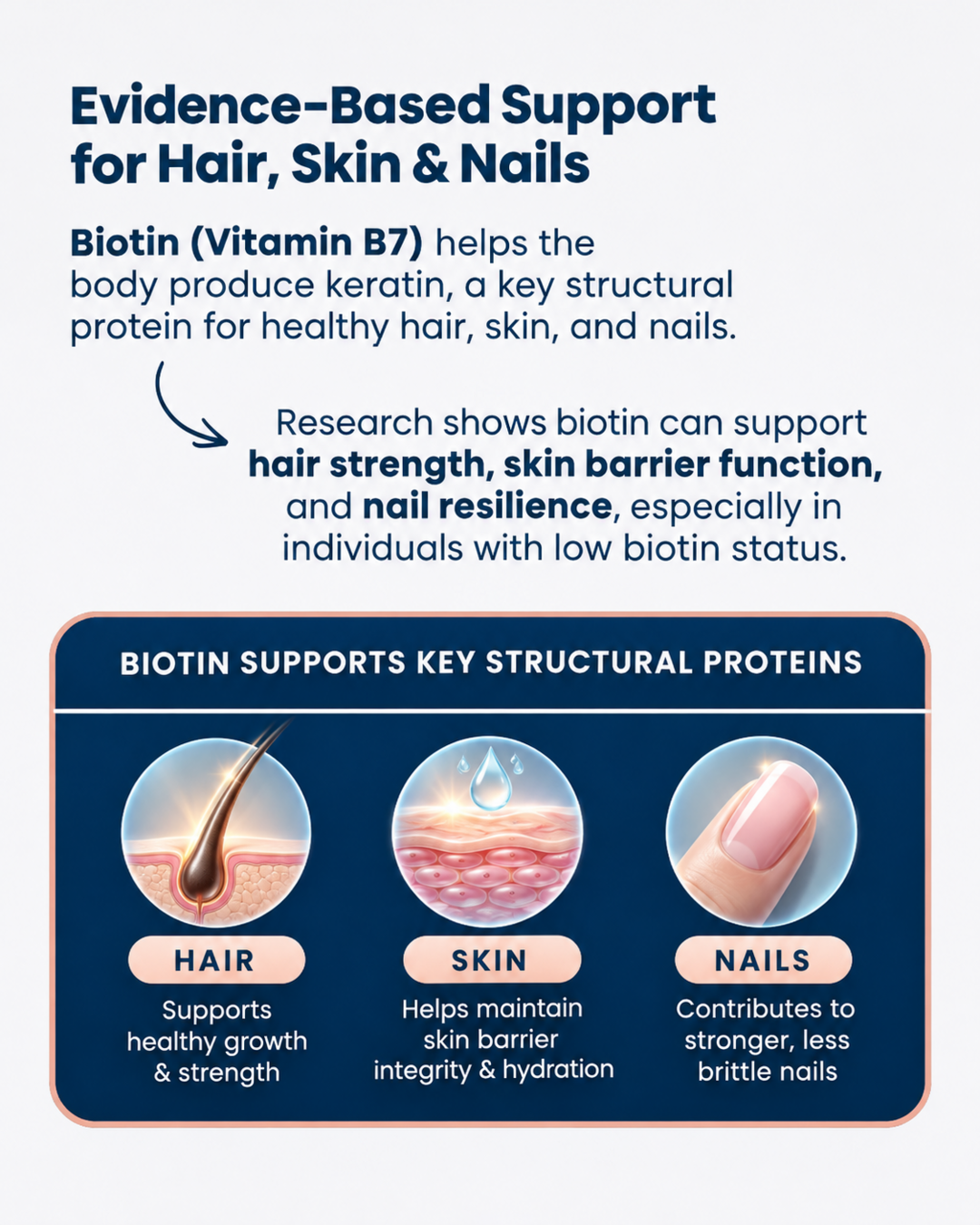
Biotin, also known as vitamin B7, helps your body metabolize carbohydrates, fats, and proteins. It is essential for normal cellular function and supports healthy hair, skin, and nails [1].
Should working adults take biotin supplements?
Adults with inconsistent diets may consider a standard-dose supplement to help meet daily nutritional requirements. Working long hours doesn't necessarily cause biotin deficiency, but supplementation can be a convenient way to support consistent intake.
Can biotin help with hair growth?
Biotin is necessary for normal hair health, and correcting inadequate intake may help with deficiency-related hair changes. Evidence that additional biotin improves hair growth in people with adequate intake remains limited [1][2].
Can biotin help strengthen brittle nails?
Small studies have reported improvements in brittle nails with biotin supplementation. However, larger studies are needed to confirm its effectiveness in people without inadequate intake [1][2].
How much biotin should adults take daily?
The adequate intake is approximately 30 mcg per day for adults and 35 mcg during breastfeeding [1].
Is biotin safe to take every day?
Biotin is generally well tolerated at standard nutritional doses. Higher-dose supplements may interfere with certain laboratory tests, so it's important to inform your healthcare provider about your supplement use [7][9].
Can I take biotin even if I don't have a diagnosed deficiency?
Yes. A standard-dose supplement can help maintain adequate intake when your diet is inconsistent. However, most healthy adults obtain enough biotin from food, so supplementation is optional rather than universally necessary.
Is IV biotin better than oral biotin?
Oral biotin is generally well absorbed and is suitable for meeting daily nutritional needs. IV administration has not been shown to provide superior hair, skin, or nail benefits in otherwise healthy adults.
References
[1] National Institutes of Health, Office of Dietary Supplements. Biotin: Fact Sheet for Health Professionals.
https://ods.od.nih.gov/factsheets/Biotin-HealthProfessional/
[2] Ruiz-Tagle SA, et al. Micronutrients in Hair Loss. Our Dermatology Online. 2018.
https://www.odermatol.com/odermatology/20183/25.Micronutrients-Ruiz-TagleSA.pdf
[3] A Comprehensive Investigation of Biochemical Status in Patients With Telogen Effluvium: Analysis of Hb, Ferritin, Vitamin B12, Vitamin D, Thyroid Function Tests, Zinc, Copper, Biotin, and Selenium Levels.
https://www.ncbi.nlm.nih.gov/pmc/articles/PMC11626366/
[4] Intermittent Chronic Telogen Effluvium With an Unusual Dermoscopic Finding Following COVID-19. Clinical Case Reports.
https://www.ncbi.nlm.nih.gov/pmc/articles/PMC9361802/
[5] Post COVID Telogen Effluvium: The Diagnostic Value of Serum Ferritin Biomarker and the Preventive Value of Dietary Supplements. A Case Control Study.
https://www.ncbi.nlm.nih.gov/pmc/articles/PMC11156737/
[6] The Diagnosis and Treatment of Iron Deficiency and Its Potential Relationship to Hair Loss. Journal of the American Academy of Dermatology.
https://www.sciencedirect.com/science/article/abs/pii/S0190962205047456
[7] U.S. Food and Drug Administration. The FDA Warns That Biotin May Interfere With Lab Tests: Safety Communication.
https://wayback.archive-it.org/7993/20201220000025/https://www.fda.gov/medical-devices/safety-communications/update-fda-warns-biotin-may-interfere-lab-tests-fda-safety-communication
[8] American Society of Anesthesiologists. Biotin (Vitamin B7): Safety Communication, May Interfere With Lab Tests.
https://www.asahq.org/advocacy-and-asapac/fda-and-washington-alerts/fda-alerts/2017/12/biotin-vitamin-b7-safety-communication-may-interfere-with-lab-tests
[9] Association for Diagnostics & Laboratory Medicine (formerly AACC). Guidance Document on Biotin Interference in Laboratory Tests.
https://myadlm.org/science-and-research/academy-guidance/biotin-interference-in-laboratory-tests