Here's what's going on physiologically, and what genuinely helps recovery.
What Actually Happens in Your Muscles After Exercise
Intense or unfamiliar exercise — especially anything involving eccentric muscle contractions, like downhill running, squatting, or lowering a weight slowly — creates microscopic tears in muscle fibers. That's a normal, expected part of training; it's how muscle adapts and gets stronger over time.
But the repair process triggers an inflammatory response. Immune cells move into the tissue to clear damaged fibers, and that inflammation is what causes the swelling, stiffness, and tenderness most people associate with soreness. This response typically builds over 24 to 48 hours, which is why DOMS often feels worse two days after a workout than the day of [1].
At the same time, intense activity depletes fluid and electrolytes through sweat, draws down glycogen (your muscles' stored fuel), and creates metabolic byproducts your body needs to clear. Recovery isn't one process — it's several running in parallel: rehydration, inflammation resolution, glycogen replenishment, and tissue repair.
Why Hydration Plays a Bigger Role Than Most Athletes Realize
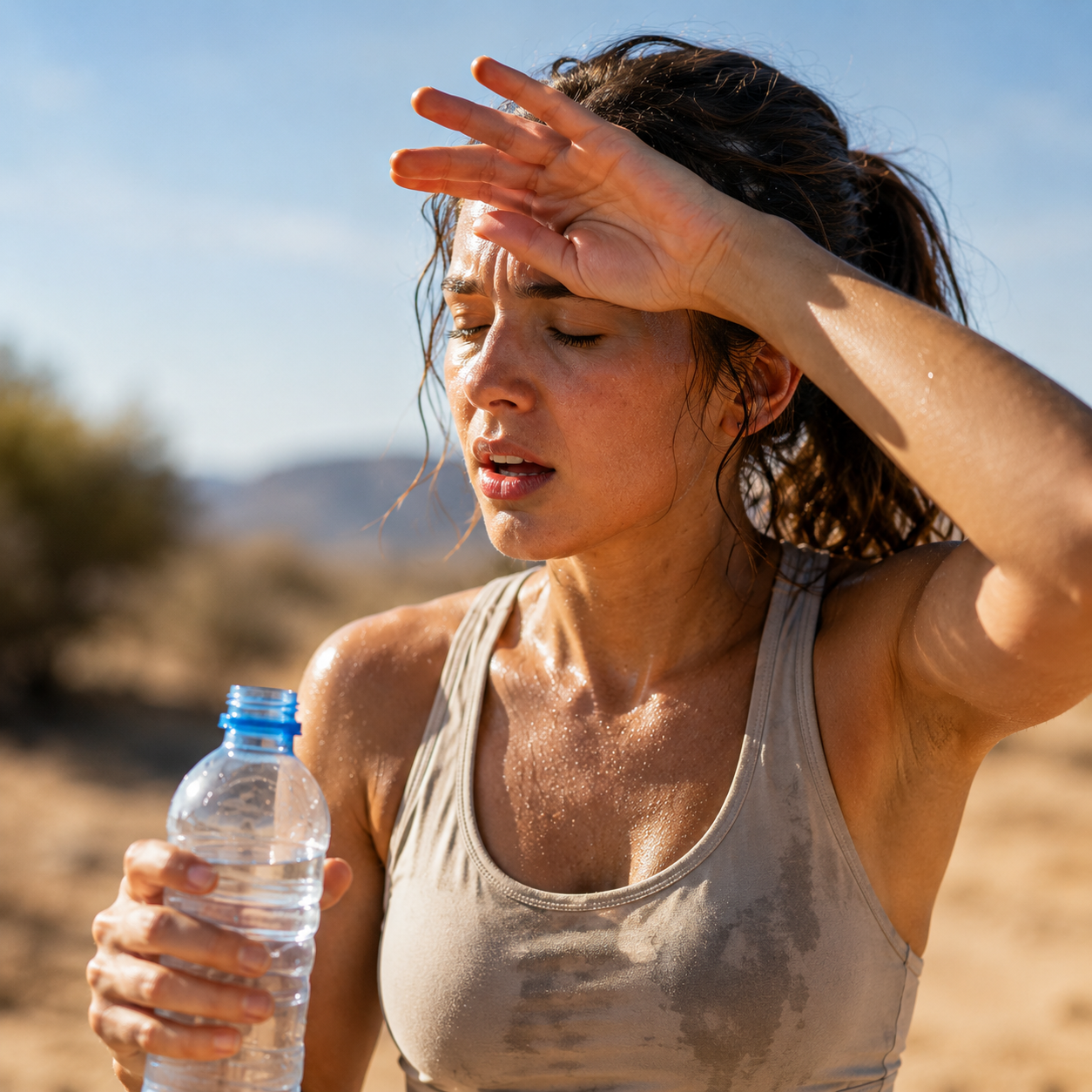
Sweat isn't just water — it carries sodium, potassium, and magnesium, the electrolytes your muscles need to contract and relax properly. Lose enough of them without replacing them and you're not just thirsty; you're more prone to cramping, you fatigue faster in your next session, and your body has a harder time delivering nutrients to damaged tissue for repair.
Endurance athletes, anyone training in heat, and people who are "salty sweaters" (you'll know if you see white residue on dark clothing after a workout) tend to lose electrolytes at a higher rate and may need more deliberate replacement than water alone provides [2].
We go deeper into the science of fluid absorption in
IV Hydration vs. Drinking Water: What's the Difference? — worth a read if you want to understand exactly why oral and IV hydration aren't interchangeable. Feeling lightheaded when you stand up after a hard session is often electrolyte-related too; we break down the possible causes in
Why Am I Lightheaded When I Stand Up?
Normal Soreness vs. Signs You Should Get Evaluated
Typical DOMS is diffuse, symmetric, and improves steadily over 3 to 5 days. It's uncomfortable, not alarming.
Consider seeking medical evaluation if you notice:
- Severe swelling in one specific muscle, especially with dark urine (a possible sign of rhabdomyolysis, a serious breakdown of muscle tissue) [3]
- Pain that's sharp, localized, or worsening rather than easing after a few days
- Numbness, tingling, or significant weakness in a limb
- Soreness accompanied by fever,
persistent dizziness, or an inability to keep fluids down
These aren't typical training soreness and warrant a call to your physician rather than a recovery routine. If you're also dealing with signs of significant fluid loss, our guide on
when to go to the ER for dehydration walks through the warning signs worth taking seriously.
What Actually Speeds Recovery
Before anything else, the basics still do most of the work:
- Rehydrate deliberately — don't just drink to thirst after heavy sweat loss; replace fluids with electrolytes, not water alone
- Prioritize protein in the hours after training to support muscle repair
- Sleep is when most tissue repair and growth hormone release happens — this is the single most underrated recovery tool [4]
- Active recovery (easy movement, light walking) supports circulation better than complete rest
- Gradual training load increases prevent the kind of unaccustomed muscle damage that causes the worst soreness
When IV Hydration May Help
For most single workouts, oral hydration and food do the job. Where IV support tends to make more sense is in specific situations:
- Multi-day events or tournaments, where there isn't enough time between sessions for oral rehydration to fully catch up
- Heavy sweat loss in heat or humidity, where fluid and electrolyte deficits are larger than typical
- GI upset after intense exertion that makes it hard to keep fluids or food down
- Athletes who consistently struggle to rehydrate by mouth alone, despite trying — see our
Dehydration support page for a broader look at when this applies beyond athletics
If low energy rather than soreness is your main post-training complaint, that's a related but distinct issue — our
Energy & Focus support page covers it separately.
IV hydration delivers fluids and electrolytes directly into the bloodstream, bypassing digestion — which can be useful when oral intake isn't keeping pace with losses. It isn't a substitute for sleep, nutrition, or a smart training plan, and it isn't necessary after every workout. Our
AQUA PERFORMANCE and
AQUA RECOVERY STAT formulations are built around this specific use case — replacing fluids, electrolytes, and key nutrients when the demands on your body outpace what's practical to replace by mouth alone.
Persistent fatigue after training that doesn't resolve with rest is also worth a closer look — dehydration and low iron are two common, often-overlooked contributors in athletes. We cover the full range of causes in
Why Am I Always Tired? 7 Medical Causes (Including Iron Deficiency).
Frequently Asked Questions
Does IV therapy get rid of muscle soreness? IV hydration can support the recovery processes your body relies on — proper fluid balance and electrolyte levels — but it doesn't eliminate the inflammatory process behind DOMS. Soreness still needs time to resolve.
How soon after a workout can I get IV therapy? There's no strict waiting period for hydration-focused IV therapy. Some athletes use it same-day after heavy exertion, particularly after endurance events.
Is IV therapy better than drinking water after exercise? For most everyday workouts, oral hydration with electrolytes is sufficient. IV therapy is more relevant when fluid losses are significant, oral intake isn't keeping up, or time to recover is short.
Who benefits most from athletic recovery IV therapy? Endurance athletes, people training or competing in heat, those with heavy or frequent sweat loss, and anyone recovering from multi-day competition schedules tend to see the most practical benefit.
If you're training or competing in Kitsap County and want physician-directed recovery support after a heavy training block or event, AQUA MD offers mobile IV therapy at home, so you can rehydrate and recover without leaving the couch.
Learn more about our Athletic Recovery support.
This article is for informational purposes only and is not a substitute for professional medical advice. Consult a physician for any concerning or persistent symptoms.
References
- Chen TC, et al. Temporal Pattern of the Repeated Bout Effect of Eccentric Exercise on Delayed-Onset Muscle Soreness. National Library of Medicine, PMC.
https://pmc.ncbi.nlm.nih.gov/articles/PMC164305/
- National Athletic Trainers' Association. Fluid Replacement for Athletes: Position Statement. NATA.
https://www.nata.org/sites/default/files/2025-08/FluidReplacementsForAthletes.pdf
- Exertional Rhabdomyolysis in Athletes. Emergency Medicine Residents' Association (EMRA).
https://emra.org/emresident/article/exertional-rhabdomyolysis
- Sleep and Athletic Performance: A Multidimensional Review of Physiological and Molecular Mechanisms. National Library of Medicine, PMC.
https://www.ncbi.nlm.nih.gov/pmc/articles/PMC12610528/