Hydration Is More Than Just Drinking Water
Water makes up approximately 50–60% of an adult's body weight, although this varies with age, sex, and body composition.[5]
Every organ depends on adequate hydration.
Water helps:
- Maintain blood volume
- Transport oxygen and nutrients
- Remove metabolic waste
- Regulate body temperature
- Support kidney function
- Lubricate joints
- Protect the brain and spinal cord
- Enable normal muscle and nerve function[5][6]
Hydration is also closely tied to electrolyte balance. Sodium, potassium, chloride, bicarbonate, magnesium, calcium, and phosphate work together to regulate fluid movement between the bloodstream and cells, maintain normal heart rhythm, support muscle contraction, and preserve nerve signaling.[7]
Simply put, hydration is not just about replacing water—it's about maintaining the right balance of fluids and electrolytes throughout the body.
How Your Body Absorbs Water
When you drink a glass of water, the fluid doesn't immediately enter your bloodstream.
Instead, it follows a remarkably efficient physiological pathway.
After swallowing, water travels through the esophagus into the stomach. Although the stomach absorbs a small amount of water, most absorption occurs in the small intestine, where specialized cells transport water and electrolytes across the intestinal lining and into the bloodstream.[8]
This process depends on several factors, including:
- Normal stomach emptying
- Healthy intestinal function
- Adequate blood flow
- Electrolyte gradients
- Osmosis and active transport mechanisms[8][9]
Once absorbed, the circulatory system distributes water throughout the body. The kidneys continuously adjust urine production to maintain an appropriate fluid balance, while hormones such as antidiuretic hormone (ADH) and aldosterone help regulate water retention and electrolyte concentrations.[10]
In healthy individuals, this system is extraordinarily effective.
In fact, under normal circumstances, oral hydration is the body's preferred method of replacing fluids.
Why Oral Hydration Is Usually the Best Choice
Despite the popularity of IV hydration clinics, medical guidelines consistently recommend oral hydration whenever possible.[1][11]
Why?
Because the digestive system is designed specifically for this purpose.
Most people recovering from:
can successfully replace fluids simply by drinking water and, when appropriate, electrolyte-containing beverages.[1]
Oral hydration also allows the body to regulate fluid absorption naturally.
Instead of receiving a fixed volume rapidly, the digestive tract gradually absorbs fluids according to the body's physiological needs. This controlled process reduces the risk of fluid overload while allowing the kidneys and endocrine system to maintain precise electrolyte balance.[10]
For children and adults experiencing mild to moderate dehydration from gastroenteritis, oral rehydration solutions (ORS) remain one of the greatest public health advances of the last century. Properly formulated ORS contains carefully balanced concentrations of sodium and glucose that enhance water absorption through sodium-glucose co-transport mechanisms in the intestine.[12]
The World Health Organization credits oral rehydration therapy with saving millions of lives worldwide.[12]
What Happens During Dehydration?
Dehydration occurs when fluid losses exceed fluid intake.
This imbalance can develop gradually or very rapidly.
Common causes include:
- Fever
- Vomiting
- Diarrhea
- Excessive sweating
- Heat exposure
- Vigorous exercise
- Certain medications such as diuretics
- Reduced fluid intake due to illness or nausea[13]
As dehydration progresses, blood volume decreases.
To compensate, the body activates several protective mechanisms.
The brain releases antidiuretic hormone, causing the kidneys to conserve water. Heart rate may increase to maintain blood pressure. Blood vessels constrict. Thirst intensifies, encouraging fluid intake.[10]
Early symptoms often include:
- Dry mouth
- Increased thirst
- Fatigue or
brain fog
- Headache
- Lightheadedness
- Dark urine
- Reduced urine output
People commonly describe dehydration-related symptoms as
dizziness, unsteadiness, or feeling faint. Persistent fatigue should not automatically be attributed to dehydration. Other causes, including sleep problems, thyroid disorders, and
iron deficiency without anemia, may need to be considered.
More severe dehydration may lead to:
- Confusion
- Rapid heartbeat
- Low blood pressure
- Poor skin perfusion
- Altered mental status
- Kidney injury
- Shock in extreme cases[13][14]
Recognizing these symptoms early is important because prompt fluid replacement can often prevent progression.
In people with
POTS or other forms of dysautonomia, fluid intake and electrolyte balance may be particularly relevant, although treatment should be individualized with a clinician.
How IV Hydration Works
Intravenous hydration follows a completely different route.
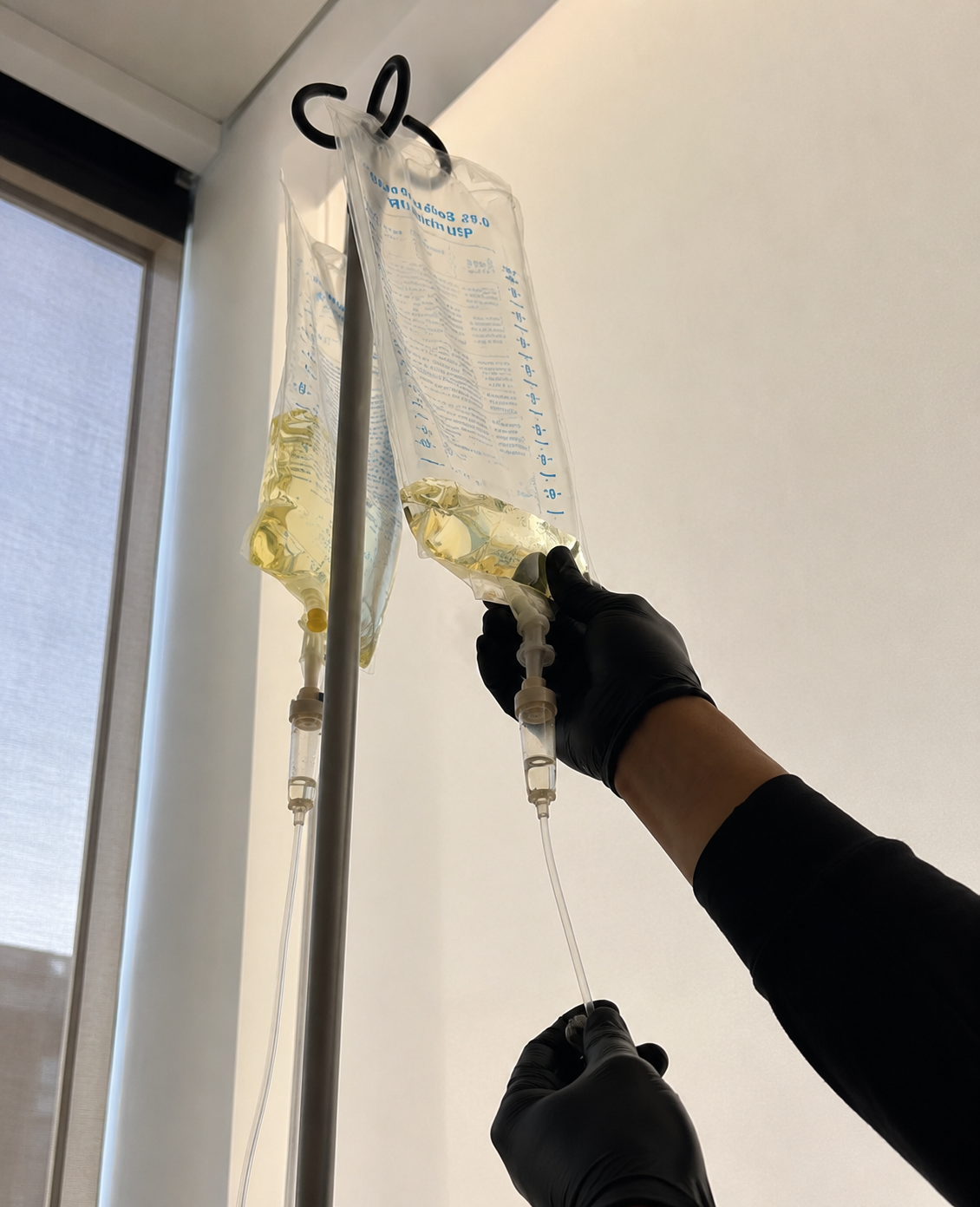
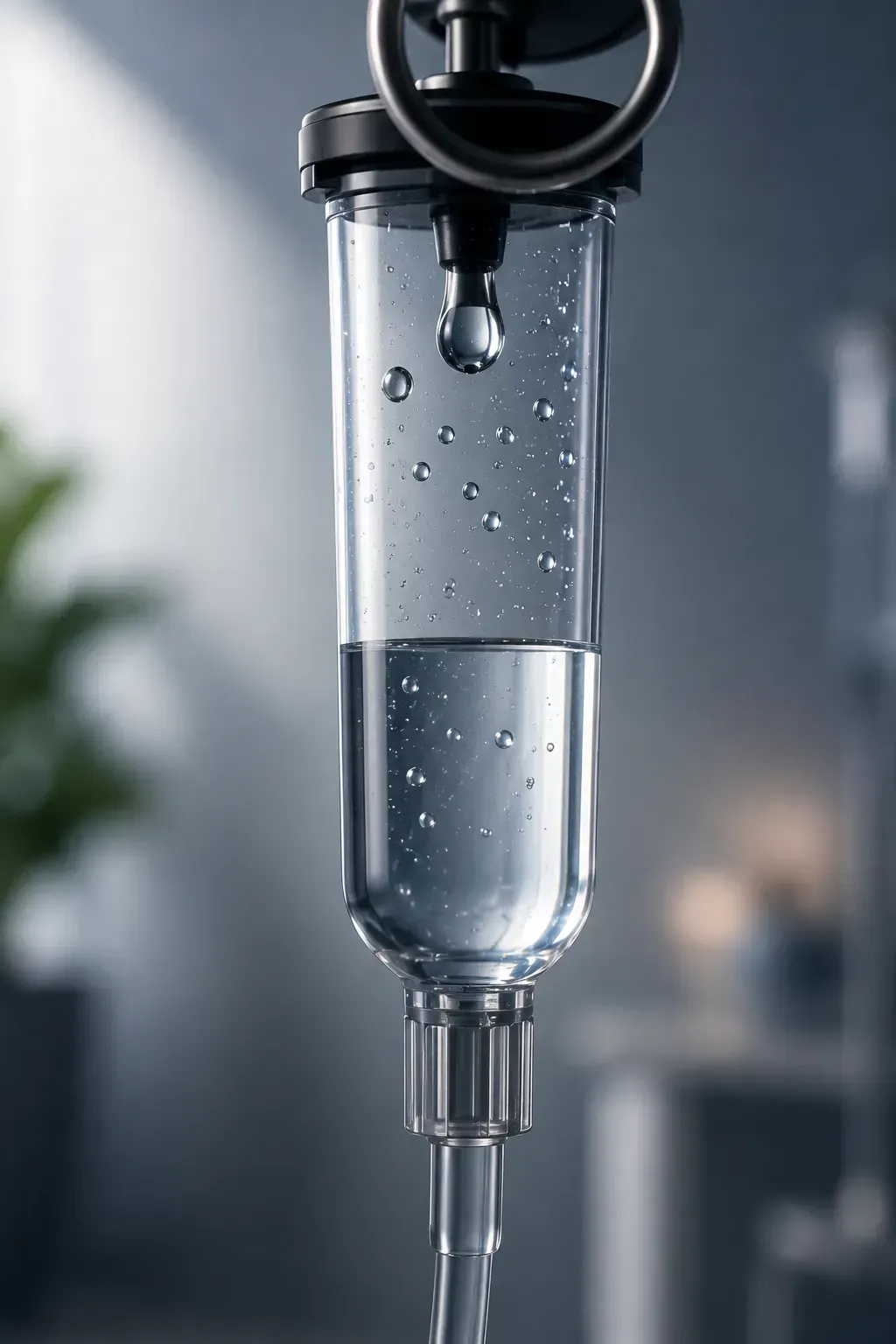
Rather than entering through the digestive system, sterile fluids are infused directly into a peripheral vein through an IV catheter.
Once the fluids enter the bloodstream, they immediately contribute to the body's circulating fluid volume.[3]
This bypasses:
- The stomach
- Gastric emptying
- The intestines
- Intestinal absorption
For patients who cannot keep fluids down because of persistent vomiting or who have impaired gastrointestinal absorption, this route offers a practical advantage.[3][15]
It's important, however, to understand what IV hydration does not do.
It does not:
- Cure viral infections
- Replace healthy lifestyle habits
- Instantly fix chronic fatigue
Instead, IV hydration restores circulating fluid volume when oral hydration is inadequate or not feasible.[3]
If you're considering IV hydration, you may also wonder how long the effects typically last. We cover that in
How Long Does IV Hydration Last? A Physician Explains.
IV Fluids Are More Than Water
Many people imagine an IV bag contains only purified water.
In reality, administering plain sterile water intravenously would be dangerous because it would rapidly damage red blood cells due to osmotic effects.[16]
Instead, commonly used IV fluids are carefully formulated crystalloid solutions.
Examples include:
Normal Saline (0.9% Sodium Chloride)
Contains:
- Sodium
- Chloride
- Sterile water
Normal saline closely approximates the osmolarity of blood plasma and is frequently used for volume replacement.[17]
Lactated Ringer's Solution
Lactated Ringer's contains:
- Sodium
- Chloride
- Potassium
- Calcium
- Lactate (which is metabolized into bicarbonate)
Because its electrolyte composition more closely resembles human plasma than normal saline, Lactated Ringer's is commonly used during surgery, trauma resuscitation, and many dehydration scenarios.[18]
Balanced Crystalloids
Modern critical care increasingly favors balanced crystalloids in many clinical situations because they may reduce the risk of hyperchloremic metabolic acidosis compared with large volumes of normal saline.[19]
The choice of IV fluid depends on the patient's medical condition, electrolyte status, kidney function, acid-base balance, and overall clinical picture—not simply on a preference for one fluid over another.
Does IV Hydration Work Faster?
The short answer is yes—but context matters.
Because IV fluids enter directly into the bloodstream, they bypass the time required for gastric emptying and intestinal absorption.[3]
This can be especially beneficial for patients who:
- Cannot tolerate oral fluids because of repeated vomiting
- Have significant gastrointestinal fluid losses
- Require rapid restoration of circulating blood volume
- Have impaired intestinal absorption
However, "faster" does not necessarily mean "better."
For someone who is mildly dehydrated after working outdoors on a warm day and can comfortably drink water, oral hydration remains the recommended first-line approach.[1]
The body's natural digestive system is remarkably effective, and there is no evidence that healthy individuals routinely benefit from IV hydration when adequate oral hydration is possible.[11]
The route of administration should match the clinical situation—not convenience alone.
Still unsure whether drinking water is enough or whether you should consider IV hydration? Our physician-created decision guide,
Should You Drink Water or Consider IV Hydration? A Physician's Guide to Making the Right Choice, walks you through common situations and helps explain when to continue hydrating at home, when to consider IV fluids, and when emergency medical evaluation is the safest option.
Frequently Asked Questions
Is IV hydration better than drinking water?
Not necessarily. For most healthy people, drinking water and staying hydrated by mouth is the preferred and recommended approach. IV hydration is typically reserved for situations where someone cannot drink enough fluids, cannot keep fluids down, or requires more rapid fluid replacement for medical reasons.[1][2]
Does IV hydration work faster than drinking water?
Yes. IV fluids enter directly into the bloodstream, bypassing the stomach and intestines. This allows circulating fluid volume to be restored more rapidly when medically indicated. However, for most healthy individuals who can drink fluids normally, oral hydration is effective and remains the first-line recommendation.[2][3]
Why can't doctors just give sterile water through an IV?
Pure sterile water cannot be administered intravenously because it is hypotonic and can cause red blood cells to swell and rupture (hemolysis). Instead, healthcare professionals use sterile isotonic solutions such as Normal Saline or Lactated Ringer's that are formulated to safely match the body's physiology.[4]
Is IV hydration absorbed 100%?
IV fluids are delivered directly into the bloodstream, so they bypass the digestive tract entirely. However, your body still regulates those fluids through the kidneys, blood vessels, and tissues. Excess fluid is naturally eliminated through urine when appropriate.[2]
When should someone consider IV hydration instead of drinking water?
IV hydration may be appropriate when a person cannot adequately maintain hydration by mouth, such as with persistent vomiting, severe diarrhea, significant dehydration, certain postoperative conditions, or other medical situations where oral hydration is not feasible. A medical evaluation is important to determine the most appropriate treatment.[2][5]
Can IV hydration cure the flu or a viral illness?
No. IV hydration does not cure viral infections. Its primary role is supportive—helping restore fluids and electrolytes when dehydration is present. Recovery from viral illnesses still depends on the body's immune response and appropriate medical care.[6]
Are IV fluids the same as water?
No. IV fluids are sterile crystalloid solutions containing carefully balanced electrolytes. Common formulations include Normal Saline and Lactated Ringer's, each designed for specific clinical purposes.[4]
Related Reading
References
[1] World Health Organization (WHO). Oral Rehydration Salts: Production of the New ORS.
https://www.who.int/publications/i/item/WHO-FCH-CAH-06.1
[2] Taylor K, Tripathi AK. Adult Dehydration. StatPearls Publishing. National Center for Biotechnology Information (NCBI Bookshelf). Updated March 5, 2025.
https://www.ncbi.nlm.nih.gov/books/NBK555956/
[3] Merck Manual Professional Edition. Dehydration in Adults.
https://www.merckmanuals.com/professional
[4] National Institute of Diabetes and Digestive and Kidney Diseases (NIDDK). Treatment of Food Poisoning.
https://www.niddk.nih.gov/health-information/digestive-diseases/food-poisoning/treatment
[5] U.S. Geological Survey (USGS). The Water in You: Water and the Human Body.
https://www.usgs.gov/special-topics/water-science-school/science/water-you-water-and-human-body
[6] MedlinePlus. Body Water Balance. U.S. National Library of Medicine.
https://medlineplus.gov/
[7] Merck Manual Professional Edition. Overview of Electrolyte Disorders.
https://www.merckmanuals.com/professional/endocrine-and-metabolic-disorders/electrolyte-disorders
[8] StatPearls. Physiology, Gastrointestinal Absorption. NCBI Bookshelf.
https://www.ncbi.nlm.nih.gov/books/
[9] National Institute of Diabetes and Digestive and Kidney Diseases (NIDDK). Your Digestive System & How It Works.
https://www.niddk.nih.gov/health-information/digestive-diseases/digestive-system-how-it-works
[10] StatPearls. Physiology, Antidiuretic Hormone (ADH). NCBI Bookshelf.
https://www.ncbi.nlm.nih.gov/books/
[11] Centers for Disease Control and Prevention (CDC). Managing Acute Gastroenteritis Among Children: Oral Rehydration, Maintenance, and Nutritional Therapy.
https://www.cdc.gov/mmwr/preview/mmwrhtml/rr5216a1.htm
[12] World Health Organization (WHO). The Treatment of Diarrhoea: A Manual for Physicians and Other Senior Health Workers.
https://iris.who.int/handle/10665/43209
[13] Mayo Clinic. Dehydration: Symptoms and Causes.
https://www.mayoclinic.org/diseases-conditions/dehydration/symptoms-causes/syc-20354086
[14] MedlinePlus. Dehydration.
https://medlineplus.gov/dehydration.html
[15] StatPearls. Fluid Management. NCBI Bookshelf.
https://www.ncbi.nlm.nih.gov/books/
[16] StatPearls. Intravenous Fluids. NCBI Bookshelf.
https://www.ncbi.nlm.nih.gov/books/