Why Drinking Water Is Usually Enough
Your digestive system is remarkably efficient.
If vomiting prevents you from staying hydrated and symptoms continue, learn
when dehydration becomes serious enough to require medical evaluation.
After you drink fluids, water and electrolytes are absorbed through your stomach and small intestine before entering the bloodstream.
For most people, this process works extremely well.
That's why organizations such as the World Health Organization (WHO), the Centers for Disease Control and Prevention (CDC), and the National Institute of Diabetes and Digestive and Kidney Diseases recommend oral hydration as the first-line treatment for mild dehydration.[2][3][4]
IV hydration is not a replacement for healthy daily hydration—it is simply another route when normal absorption isn't enough.
When IV Hydration May Be Appropriate
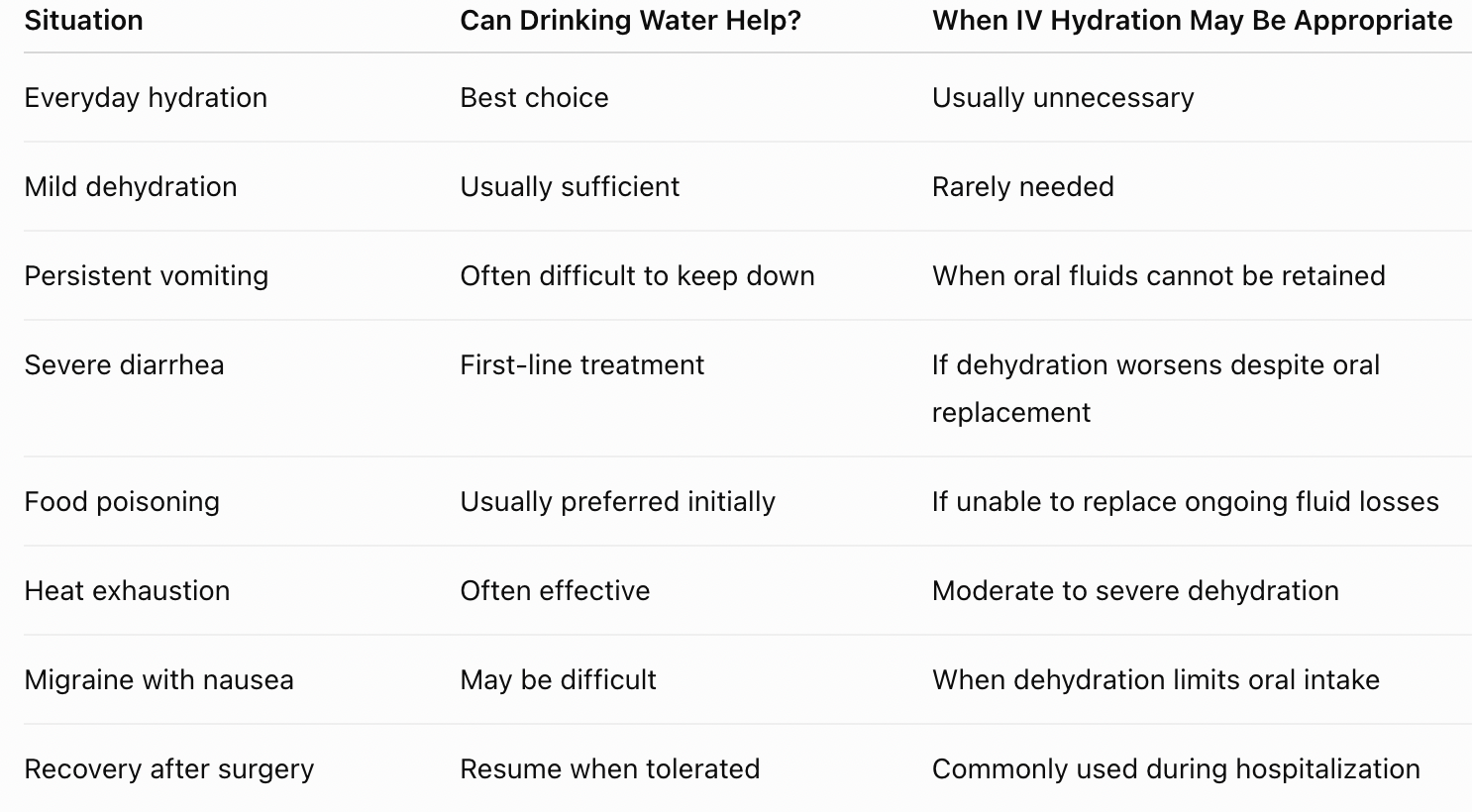
1. Persistent Vomiting
Vomiting causes rapid fluid and electrolyte losses.
It also creates another problem:
You can't replace those losses if everything you drink comes right back up.
People often describe taking a few sips of water only to vomit again minutes later.
As dehydration progresses, symptoms may include:
- Dry mouth
- Headache
- Dizziness
- Fatigue
- Dark urine
- Reduced urination
- Rapid heart rate
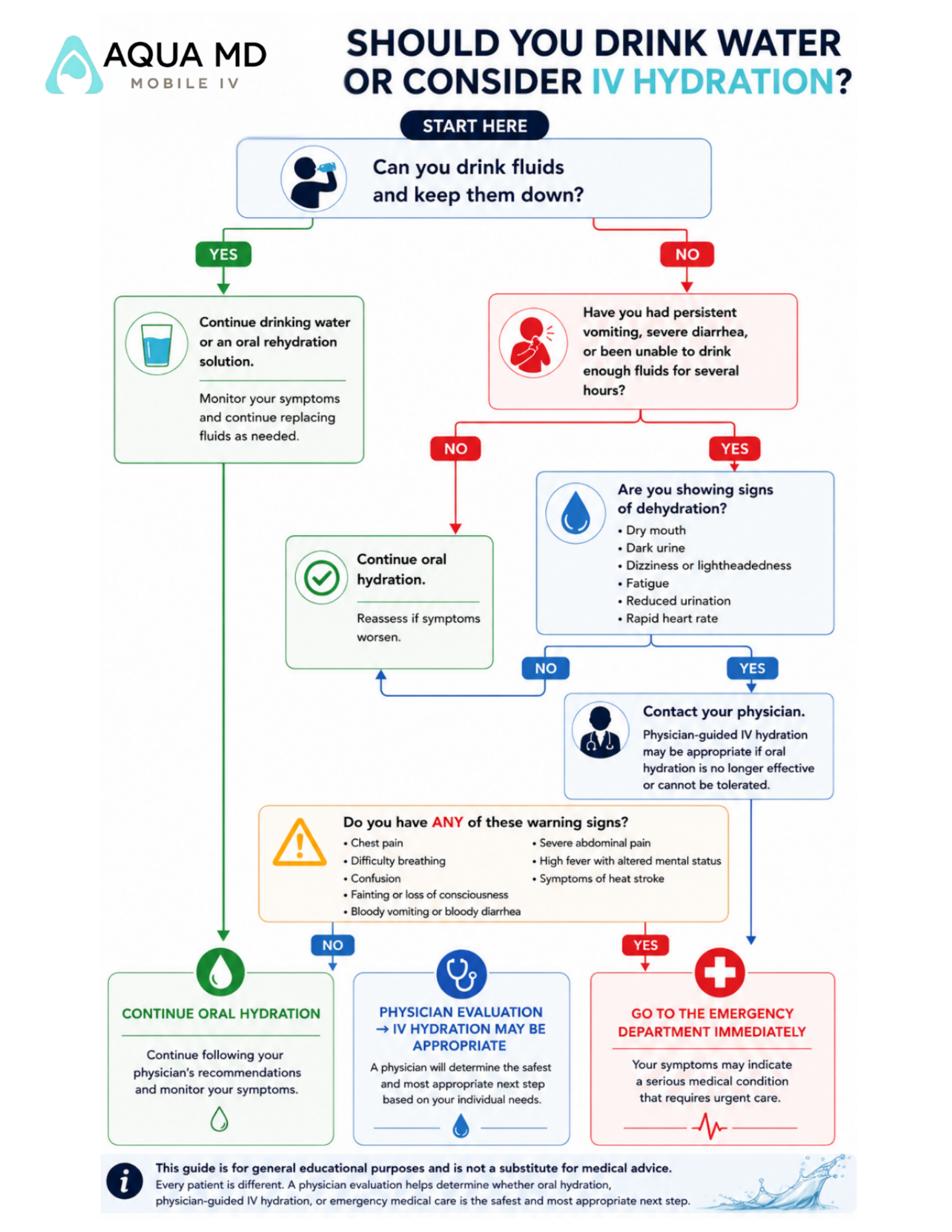
When oral fluids cannot be retained despite repeated attempts, physician-guided IV hydration may become appropriate while the underlying cause of the vomiting is evaluated.[5]
If dehydration continues despite your best efforts to drink fluids, our guide on
Persistent Dehydration: When IV Hydration May Help explains when additional medical evaluation may be appropriate.
2. Severe Diarrhea
Diarrhea removes large amounts of:
- Water
- Sodium
- Potassium
- Chloride
- Bicarbonate
These losses can occur surprisingly quickly.
Most adults recover well using oral rehydration solutions and continued fluid intake.
However, prolonged diarrhea or severe ongoing losses can exceed the body's ability to replace fluids orally.
IV hydration may then become part of supportive medical treatment.[3]
3. Food Poisoning
Food poisoning often combines both vomiting and diarrhea.
This "double hit" significantly increases the risk of dehydration.
It's important to understand:
IV fluids
do not kill bacteria or viruses causing food poisoning.
Instead, they help restore circulating fluids while your body recovers.[6]
4. Heat Illness
During prolonged heat exposure or strenuous exercise, your body loses both water and electrolytes through sweat.
Early symptoms include:
- Thirst
- Muscle cramps
- Headache
- Fatigue
- Dizziness
- Increased heart rate
Many cases improve with:
- Rest
- Cooling
- Oral fluids
- Electrolyte replacement
However, more significant dehydration or heat exhaustion may require medical evaluation and IV fluids.
Heat stroke is a medical emergency requiring immediate emergency care.[7]
5. Migraine Accompanied by Dehydration
Dehydration is a recognized migraine trigger for some people.
Unfortunately, migraine itself often causes:
- Nausea
- Vomiting
- Light sensitivity
- Difficulty drinking fluids
When dehydration accompanies migraine, restoring fluid balance may improve dehydration-related symptoms while migraine-specific treatments address the headache itself.[8]
Learn more about our physician-directed approach to IV hydration for
migraine recovery.
6. Recovery After Surgery
Patients frequently receive IV fluids during surgery because they:
- Fast before anesthesia
- Experience fluid shifts
- May lose blood
- Often cannot drink immediately afterward
Once patients are able to eat and drink safely, oral hydration again becomes the preferred option.
Some people recovering at home continue to struggle with nausea or poor oral intake, making physician evaluation important before deciding whether IV hydration is appropriate.[9]
7. Older Adults
Older adults are particularly vulnerable to dehydration because they often:
- Feel less thirsty
- Take diuretic medications
- Have chronic illnesses
- Experience reduced kidney function
Instead of feeling thirsty, they may present with:
- Confusion
- Weakness
- Falls
- Fatigue
- Poor appetite
Recognizing these signs early can help prevent more serious complications.[10]. It's also important to remember that fatigue and weakness are not always caused by dehydration. Conditions such as
iron deficiency without anemia may cause similar symptoms even when hemoglobin levels are normal.
Signs You May Be Dehydrated
Symptoms vary depending on severity.
Common symptoms include:
- Increased thirst
- Dry mouth
- Dark yellow urine
- Urinating less often
- Fatigue
- Headache
- Dizziness
- Lightheadedness
- Muscle cramps
- Rapid heart rate
- Dry skin
If symptoms worsen or you cannot keep fluids down, medical evaluation is recommended.
Many of these symptoms overlap with other medical conditions. You may also find these physician-written guides helpful:
• Why Am I Dizzy? 8 Common Causes Including Dehydration, Iron Deficiency, and POTS
• Why Am I Lightheaded When I Stand Up? Causes Including Dehydration, POTS, and Low Iron
• Why Do I Have Brain Fog? 9 Common Causes Including Dehydration, Iron Deficiency, and Stress
Is Drinking Electrolytes Enough?
Many people ask whether sports drinks or electrolyte powders can replace IV hydration.
In many mild cases, yes.
Options include:
- Water
- Oral rehydration solution (ORS)
- Electrolyte powders
- Sports drinks (depending on the situation)
Oral rehydration solutions contain carefully balanced amounts of sodium and glucose that help the intestines absorb water efficiently and are recommended for many cases of dehydration.[2]
IV hydration is generally reserved for situations where oral replacement is not possible or is insufficient.
How Quickly Does IV Hydration Work?
One common misconception is that IV hydration instantly cures dehydration.
The reality is more nuanced.
IV fluids enter the bloodstream immediately, but
how quickly someone feels better depends on why they were dehydrated in the first place.
Someone who simply became dehydrated after exercising may notice improvement relatively quickly.
Someone with influenza, food poisoning, or another illness may feel better hydrated but still experience symptoms related to the illness itself.
How Long Does an IV Hydration Session Take?
Most physician-guided hydration treatments take approximately 30 to 60 minutes, although the exact duration depends on:
- The amount of fluid administered
- Individual medical needs
- The treatment plan
Who Should NOT Receive IV Hydration?
More fluid is not always better.
Some medical conditions require careful assessment before receiving IV fluids.
Examples include:
- Congestive heart failure
- Advanced kidney disease
- Pulmonary edema
- Certain electrolyte disorders
- Liver cirrhosis with fluid overload
For these patients, unnecessary IV fluids may worsen the underlying condition.
This is one reason physician evaluation is so important before treatment.
Physician Insight
As an anesthesiologist, I routinely manage IV fluids before, during, and after surgery. One of the most common misconceptions I hear is that IV hydration is always better than drinking water. In reality, both have important roles. The right choice depends on why someone is dehydrated, whether they can safely drink fluids, and whether an underlying medical condition requires medical evaluation. Whenever possible, I encourage patients to use the least invasive option that safely meets their needs.
—
Dr. Ron Chan, DO
Myth vs. Fact
Myth:
IV hydration is always better than drinking water.
Fact:
Most healthy people stay well hydrated by drinking water and consuming a balanced diet.
Myth:
IV fluids cure viral illnesses.
Fact:
IV fluids replace fluids and electrolytes but do not eliminate viruses or bacteria.
Myth:
If you're tired, you probably need an IV.
Fact:
Fatigue has many possible causes, including poor sleep, iron deficiency, thyroid disorders, infections, medication effects, and dehydration. Identifying the underlying cause is more important than assuming dehydration is responsible.