Do I Have Low Magnesium? Signs, Causes, and When to See a Physician

Ronald Chan • November 23, 2026

Feeling unusually tired, experiencing frequent muscle cramps, or struggling with restless sleep?


Magnesium might not be the first thing that comes to mind, but this essential mineral plays an important role in how your body functions every day.


From muscle movement and nerve signaling to energy production and heart rhythm, magnesium supports hundreds of processes throughout the body [1].


But how do you know if you're getting enough?


The short answer: Low magnesium may contribute to fatigue, muscle cramps, weakness, tingling, and other symptoms. However, these complaints can have many different causes. Understanding your dietary intake, medical history, medications, and laboratory findings can help determine whether magnesium deficiency deserves further attention [1][3].

Infographic explaining magnesium's role in energy, muscle and nerve function, and factors contributing to low magnesium.

What Does Magnesium Do in Your Body?


Magnesium is involved in more than 300 enzymatic reactions and supports several essential physiologic functions [1].


These include:


  • Energy production: Helps your cells produce and use ATP, the body's primary energy source.
  • Muscle function: Supports normal muscle contraction and relaxation.
  • Nerve signaling: Helps regulate communication between nerves and muscles.
  • Heart rhythm: Contributes to normal electrical conduction and cardiac function.
  • Bone health: Plays a role in bone mineralization and skeletal health.
  • Metabolic regulation: Participates in glucose metabolism and blood pressure regulation.


These functions depend on magnesium's involvement in numerous cellular and biochemical processes [1][2].


Most of the body's magnesium is stored in bone and soft tissues, with less than 1% circulating in the bloodstream [1].


This distribution is important when evaluating magnesium status because a normal blood magnesium level does not necessarily reflect the body's total magnesium stores [1][3].


What Are the Possible Signs of Low Magnesium?


Magnesium deficiency does not always produce obvious symptoms, particularly in its early stages.


When symptoms occur, they may include:


  • Muscle cramps or twitching
  • Fatigue or generalized weakness
  • Nausea or reduced appetite
  • Tingling or numbness
  • Tremors or increased muscle irritability
  • Heart palpitations or abnormal heart rhythms in more significant cases


These symptoms are recognized manifestations of magnesium deficiency, although their presence and severity vary [1][3][4].


People also frequently associate low magnesium with poor sleep, headaches, constipation, and irritability. While these complaints may occur alongside inadequate magnesium intake, they are not specific or reliable indicators of deficiency.


Important: Fatigue, muscle cramps, and sleep disturbances can also result from dehydration, anemia, thyroid disorders, medication effects, and other medical conditions.

Magnesium deficiency is one possible explanation—not a diagnosis based on symptoms alone.


Related reading: Why Am I Always Tired? 7 Medical Causes


What Causes Low Magnesium?


Low magnesium status can develop when intake is inadequate, absorption is impaired, or the body loses more magnesium than usual [1][3].


1. Inadequate dietary intake


Magnesium is naturally present in many foods, including leafy green vegetables, legumes, nuts, seeds, and whole grains.


According to the National Institutes of Health, an analysis of U.S. dietary survey data from 2013–2016 found that approximately 48% of Americans consumed less magnesium from food and beverages than their estimated average requirements [1].


This does not mean that nearly half of Americans have a clinically diagnosed magnesium deficiency. Dietary intake and actual magnesium status are different measurements.


2. Gastrointestinal losses


Persistent diarrhea, certain gastrointestinal disorders, and conditions affecting nutrient absorption can reduce magnesium availability.


Frequent vomiting or ongoing digestive losses may also contribute to electrolyte imbalances, especially when accompanied by poor oral intake [1][4].


3. Certain medications


Some medications can affect magnesium absorption or increase its elimination through the kidneys.


Examples include:


  • Proton pump inhibitors used for acid reflux
  • Loop and thiazide diuretics
  • Certain antibiotics
  • Selected chemotherapy medications


These effects vary by medication, dose, and duration of use [1][3][4].


Never discontinue prescribed medications without discussing them with your healthcare professional.


4. Underlying medical conditions


Poorly controlled diabetes, certain kidney disorders that cause urinary magnesium wasting, and chronic heavy alcohol use may contribute to magnesium depletion [1][4].


5. Chronic stress


Stress is frequently discussed in connection with magnesium because magnesium participates in normal neuromuscular and physiological processes.


However, the relationship between everyday psychological stress and clinically significant magnesium deficiency is not fully established.


Stress should be considered in the broader context of sleep, nutrition, medications, and overall health rather than assumed to be a direct cause of deficiency.


Related reading: Why Relaxation Matters: How Stress Affects Your Body


How Do You Know If Your Magnesium Is Low?


Evaluating magnesium status involves more than looking at symptoms or relying on a single laboratory value.


A serum magnesium level is commonly used as an initial laboratory assessment.


Low serum magnesium, also called hypomagnesemia, is often defined as a concentration below approximately 1.8 mg/dL, although reference ranges vary by laboratory [3].


However, serum magnesium has an important limitation.


Because most magnesium is located within cells and bone, serum levels may appear normal even when total-body magnesium stores are reduced [1][3].


For this reason, a healthcare professional may consider several factors together:


  • Symptoms and clinical examination
  • Dietary intake and nutritional history
  • Medications that affect magnesium balance
  • Gastrointestinal or kidney conditions
  • Serum magnesium and other relevant laboratory findings
  • Potassium, calcium, and kidney function when indicated


In selected situations, additional testing, including urinary magnesium measurements, may help identify abnormal magnesium losses. Other specialized magnesium measurements exist, but they are not routinely necessary or uniformly validated as superior screening tests [1][5].


The key takeaway: A normal serum magnesium result does not always exclude magnesium depletion, but nonspecific symptoms alone do not confirm it either.


Clinical evaluation helps determine whether further investigation or treatment is appropriate.


How Can You Support Healthy Magnesium Levels?


For most people, maintaining adequate magnesium intake begins with a balanced diet.


1. Start with magnesium-rich foods


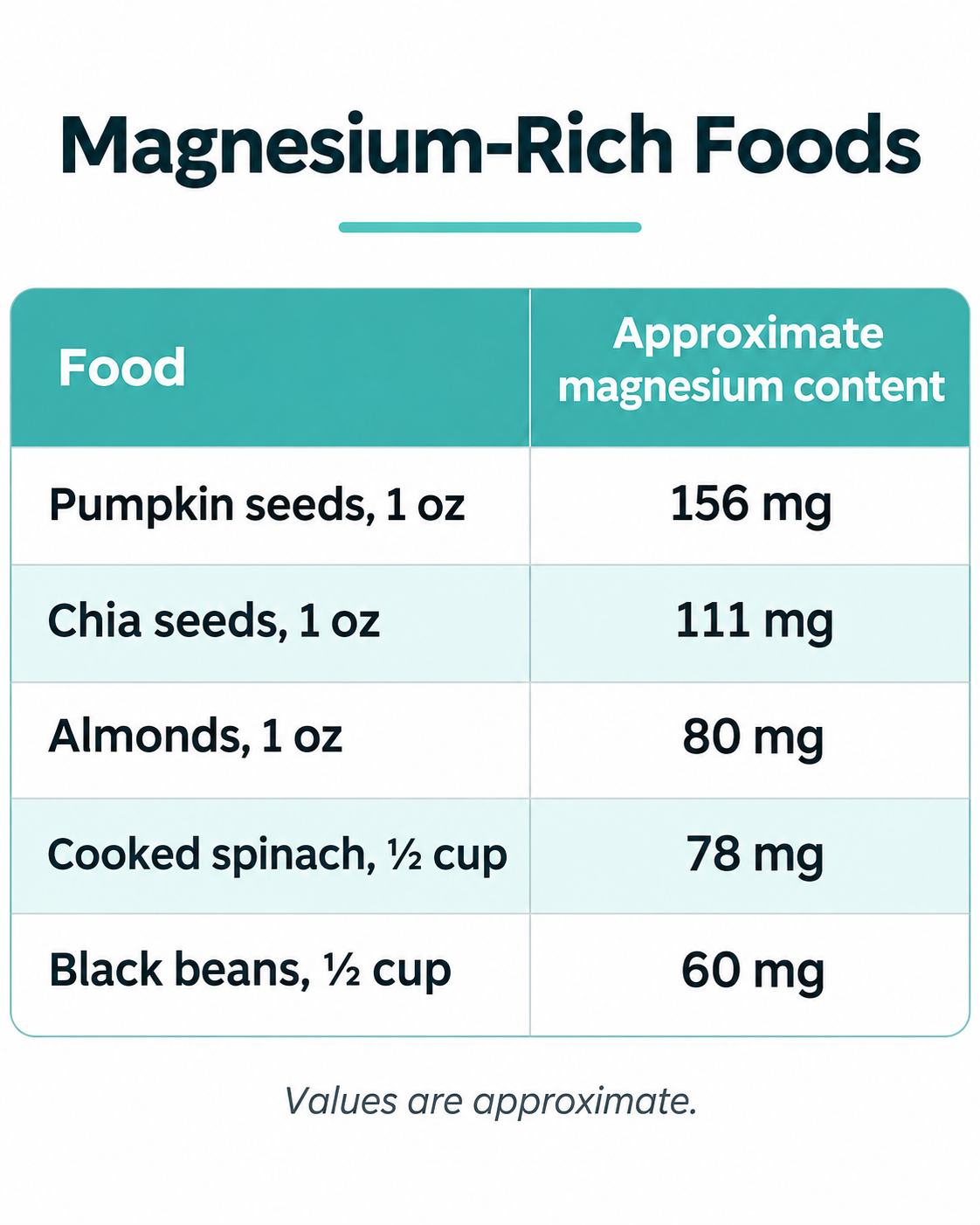
Good dietary sources include:

Table of five magnesium-rich foods and their approximate magnesium content per serving, including seeds, almonds, spinach, and beans.

Source: NIH Office of Dietary Supplements. Values are approximate and may vary by preparation [1].


The recommended dietary allowance for most adults ranges from 310 to 420 mg daily, depending on age and sex [1].


Consistently incorporating magnesium-rich foods is usually a practical first step.


2. Consider oral magnesium supplementation when appropriate


Oral magnesium supplements may be helpful when dietary intake is inadequate or when supplementation is clinically indicated.


However, not all formulations behave the same way.


Some forms, such as magnesium citrate, chloride, lactate, and aspartate, generally demonstrate better bioavailability than magnesium oxide [1].


The appropriate formulation and dose depend on individual needs, gastrointestinal tolerance, kidney function, and concurrent medications.


Excessive supplementation may cause diarrhea, nausea, or abdominal cramping. Magnesium can also interfere with the absorption of certain medications, including some antibiotics [1][2].


For most people who require magnesium replacement and can tolerate oral intake, oral supplementation is generally preferred over intravenous administration [3].


3. IV magnesium in selected clinical situations


Intravenous magnesium may be appropriate in certain medical circumstances, particularly when magnesium deficiency is significant or symptomatic, or when oral replacement is not feasible or adequately tolerated [3][5].


IV magnesium delivers magnesium directly into the bloodstream, but it is not automatically more beneficial than oral supplementation for routine wellness or nonspecific symptoms.


Its use should be based on clinical assessment, including the severity of deficiency, symptoms, kidney function, medications, and relevant laboratory findings.


Because excessive magnesium administration can cause complications, appropriate dosing and monitoring are important, particularly in patients with reduced kidney function [3][5].


IV magnesium is not routinely indicated simply because someone experiences fatigue, poor sleep, or muscle cramps.


When Should You See a Physician?


Consider a medical evaluation if you experience persistent or unexplained symptoms, particularly when accompanied by risk factors for magnesium depletion.


These may include:


  • Ongoing muscle weakness or frequent cramping
  • Persistent vomiting or diarrhea
  • Limited dietary intake or nutritional concerns
  • Long-term use of medications that affect magnesium balance
  • Conditions associated with impaired magnesium absorption or increased urinary losses
  • New or worsening tingling, tremors, or palpitations


A physician can assess whether magnesium imbalance is a reasonable concern and whether additional testing or treatment is necessary [3][4].


Seek urgent medical attention for severe weakness, fainting, seizures, chest pain, or a sustained rapid or irregular heartbeat.


Personalized Hydration and Nutrient Support in Kitsap County


At AQUA MD Mobile IV, we believe good care starts with understanding the person—not simply treating a list of symptoms.


Whether you're dealing with dehydration, limited oral intake, or concerns about your nutritional status, our physician-directed approach focuses on your medical history, current symptoms, and individual needs.


When clinically appropriate, we offer mobile IV hydration and nutrient support, including magnesium in selected circumstances.


If stress is a constant in your day, it can show up as poor sleep, tension, and low energy, and it can make it harder to stay hydrated and nourished. Our stress relief IV support is designed to help you reset by replenishing fluids and key nutrients in the comfort of your own home.


If your clinician determines that magnesium support is appropriate, one option they may discuss is AQUA Myers, a Myers' cocktail-style blend of magnesium, B vitamins, and vitamin C, along with hydration. Every plan begins with a review of your health history, medications, and symptoms.


We also recognize that IV therapy is not the right solution for everyone. When your symptoms require additional testing or a different level of care, appropriate medical evaluation comes first.


Our goal is to help you make informed decisions about your health while providing compassionate, personalized care in the comfort of your home or office.


AQUA MD Mobile IV proudly serves Bremerton, Silverdale, Poulsbo, Bainbridge Island, Port Orchard, and surrounding Kitsap County communities.


Explore Our IV Treatments

Contact AQUA MD Mobile IV


Frequently Asked Questions About Magnesium


What are the first signs of low magnesium?


Early magnesium deficiency may cause fatigue, weakness, nausea, or reduced appetite. Muscle cramps, twitching, tingling, and other neuromuscular symptoms may develop as deficiency becomes more significant [1][4].


However, these symptoms are nonspecific and can occur for many other reasons.


Can low magnesium cause muscle cramps?


Yes. Magnesium contributes to normal muscle contraction and relaxation, and significant deficiency can cause muscle cramps, twitching, or increased neuromuscular irritability [1][3].


Not all muscle cramps are caused by low magnesium, and supplementation does not consistently improve cramps in people without deficiency.


Can low magnesium affect sleep?


Magnesium participates in normal nervous system function, and researchers have investigated its relationship with sleep quality.


However, evidence that magnesium supplementation reliably improves sleep in people without deficiency remains limited.


Poor sleep alone is not a reliable indicator of low magnesium.


Can low magnesium cause heart palpitations?


Significant magnesium deficiency can contribute to abnormal cardiac electrical activity and certain arrhythmias [3][5].


However, palpitations have many potential causes, including stress, dehydration, medications, and underlying cardiac conditions.


New or worsening palpitations should not automatically be attributed to magnesium deficiency.


Does a normal magnesium blood test rule out deficiency?


Not necessarily.


Serum magnesium measures the amount circulating in the bloodstream, which represents only a small fraction of total-body magnesium.


A normal result does not always exclude depleted magnesium stores. Clinical history, symptoms, risk factors, and additional testing when appropriate help guide interpretation [1][3].


Can stress cause magnesium deficiency?


The relationship between stress and magnesium is complex.


While magnesium participates in normal physiological processes involved in the stress response, current evidence does not establish everyday psychological stress as a consistent cause of clinically significant deficiency.


Dietary intake, gastrointestinal losses, medications, and underlying medical conditions are more established factors [1][3].


Is IV magnesium better than oral supplements?


Not necessarily.


Oral supplementation is generally preferred for mild deficiency when the gastrointestinal tract can absorb and tolerate treatment.


IV magnesium is typically reserved for more significant or symptomatic deficiency, situations where oral replacement is not feasible, or other specific medical indications [3][5].


The appropriate route depends on individual clinical circumstances.


Can I receive IV magnesium at home in Kitsap County?


AQUA MD Mobile IV offers physician-directed mobile IV hydration and nutrient support in Kitsap County, including magnesium when clinically appropriate.


Treatment recommendations are individualized based on medical history, symptoms, contraindications, and relevant clinical findings.


References

1. NIH Office of Dietary Supplements. Magnesium: Fact Sheet for Health Professionals.
https://ods.od.nih.gov/factsheets/Magnesium-HealthProfessional/

2. NIH Office of Dietary Supplements. Magnesium: Fact Sheet for Consumers.
https://ods.od.nih.gov/factsheets/Magnesium-Consumer/

3. Gragossian A, Bashir K, Friede R. Magnesium. StatPearls.
https://www.ncbi.nlm.nih.gov/books/NBK519036/

4. MSD Manual Professional Edition. Hypomagnesemia.
https://www.msdmanuals.com/professional/endocrine-and-metabolic-disorders/electrolyte-disorders/hypomagnesemia

5. Pham PC, et al. Hypomagnesemia. StatPearls.
https://www.ncbi.nlm.nih.gov/books/NBK500003/

6. Merck Manual Professional Edition. Hypomagnesemia: Treatment.
https://www.merckmanuals.com/professional/endocrine-and-metabolic-disorders/electrolyte-disorders/hypomagnesemia


Medical disclaimer: This article provides general educational information and does not replace individualized medical advice, diagnosis, or treatment. Magnesium supplementation and IV administration should be considered based on clinical needs and appropriate professional guidance.


Biotin (Vitamin B7) for healthy hair, skin, and nails, shown with a peach serum droplet.
By Ronald Chan • November 11, 2026
Discover how biotin (vitamin B7) supports healthy hair, skin, nails, and metabolism. A Kitsap County physician explains daily biotin supplementation.
Abstract blue and teal microscopic illustration of influenza virus particles, representing flu trans
By Ronald Chan • November 2, 2026
How long is the flu contagious? Learn when it's safe to return to work or school, the 24-hour fever rule, and recovery tips from AQUA MD Mobile IV.
Illustration of a respiratory virus, representing cold, flu, and Covid-19 infections
By Ronald Chan • October 14, 2026
Cold, flu, or COVID-19? Learn symptoms, testing, warning signs, and recovery tips from a Kitsap County physician at AQUA MD Mobile IV, serving Kitsap County.
woman and virus-like particles against a Port Orchard–inspired waterfront, representing flu recovery
By Ronald Chan • October 7, 2026
Still feeling drained after days of rest? Dr. Ronald Chan explains lingering flu symptoms, hydration, and when to seek care in Port Orchard.
Circadian rhythm image of a shift worker between moonlit shipyard night and sunrise
By Ronald Chan • September 29, 2026
Why rotating shifts cause persistent fatigue, brain fog, and poor sleep—and how better sleep, hydration, and light habits can help shift workers.
GLP-1 side effects including dehydration, electrolyte imbalance, and nausea
By Ronald Chan • September 21, 2026
GLP-1 medications and hormone therapy may affect hydration. A physician explains dehydration, warning signs, electrolytes, and when IV hydration may help.
Microscopic view of damaged muscle fibers after exercise, showing delayed onset muscle soreness DOM
By Ronald Chan • September 13, 2026
Still sore days after a workout or race? Learn what causes delayed muscle soreness (DOMS), how hydration helps, and what supports faster athletic recovery.
Abstract scientific illustration of immune system activity, representing seasonal allergies, colds,
By Ronald Chan • September 4, 2026
Allergies or a cold? A physician breaks down fall symptom differences in Kitsap County, why your immune system dips this season, and when IV support may help.
Gut-brain connection illustration showing how signals between the digestive system and brain may con
By admin • August 25, 2026
Feeling nauseous after surgery? An anesthesiologist explains common causes, recovery timelines, what may help, and when to seek medical care.
Glowing DNA illustration representing postoperative fatigue, recovery, and healing after surgery
By admin • August 11, 2026
Feeling exhausted after surgery? Learn 12 common causes of postoperative fatigue, recovery timelines, warning signs, and physician-backed tips to heal faster.
Show More